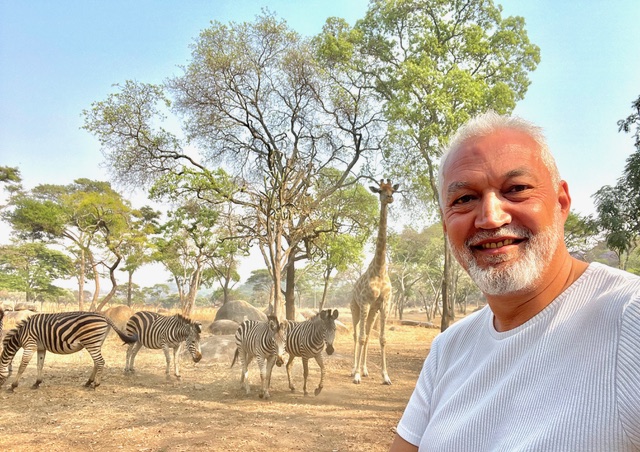
Invited by the organisation of Sanganai, Zimbabwe was my very first introduction to Southern Africa. From Amsterdam to “Zimbo”: a Dutch traveller lands in a country of big skies, warm smiles and very interesting food. This is a first-hand account of a trip where sadza, peanut stews and Lake Kariba left just as much impression as the wildlife.
Landing in Zimbo – first impressions

I boarded my flight at Amsterdam Schiphol, full of excitement. Via Nairobi I finally landed in the heart of Zimbo. It was my very first time in the country – and honestly, I barely knew anything about it beforehand. The trip started well straight away: friendly faces at the airport, a welcome that felt more like dropping in on friends than arriving somewhere completely new.
It became clear from the moment I arrived that Zimbo is so much more than just safaris and wildlife; it’s a place of warmth, culture, stunning landscapes – and seriously good food. This is a country that invites you not only to see it, but also to taste it.
Day 1 – Lodge life & first taste of sadza
After the drive from the airport I settled into my lodge, with views stretching over green hills and the faint hint of distant waterfalls. The lodge had a laid-back feel: an open veranda, the soft background chorus of insects and birds, and in the evening a campfire where travellers swapped stories.
Dinner highlight: sadza & nyama
At dinner I was introduced to sadza: a thick maize porridge that forms the base of so many meals here. You eat it with your hands, rolling it into a little ball to scoop up sauce or stew. It’s the culinary foundation of most Zimbo households – and it quickly became mine too.
That first evening I had sadza with a beef stew – often called nyama – and a side of “greens” (leafy vegetables like pumpkin leaves or something similar to kale), slowly cooked in a creamy sauce. Simple food, but it said a lot: deep flavours, and a table that was all about being together.


Day 2 – Nature, stories & a bowl of dovi
The next morning we headed out early to a nature reserve. Morning mist slid over the fields, monkeys darted gracefully through the trees, and the sound of waterfalls in the distance gave everything a magical feel. On the way I met a local guide who told me more about the Shona and Ndebele people and their way of life: farming, community rituals, and – very importantly – cooking with whatever the land has to offer.
Lunch highlight: dovi (peanut stew)
At lunch I got a bowl of dovi, a delicious peanut stew with chicken or vegetables, served with sadza. Peanuts are used in all sorts of ways in Zimbo – not just as a snack but also as the base for sauces. The dish had something really homely about it; as a Dutchie, I loved that it was filling, hearty and full of flavour.
Dinner highlight: kapenta and maize
In the evening I tried another local favourite: kapenta, tiny sardine-like fish from the lakes and rivers, fried or cooked in a sauce and usually eaten with sadza. The combination of the firm fish and the soft maize porridge gave me the sense that here, local ingredients and tradition go hand in hand on every plate.
Day 3 – Village visit & the ritual of eating together
Today I spent time with a local family in a village. The house was simple but warm and welcoming. We gathered around the open kitchen; coals glowing under a pot, the smell of onion, tomato and spices filling the air.
Home-cooked highlight: muboora in peanut sauce
I watched them knead the sadza into smooth balls and use it to scoop up a beautiful green vegetable stew – the sort of dish you don’t really find on tourist menus. The respect for ingredients, the small scale, the feeling of community – it all stood out.
At dinner I tasted muboora, pumpkin leaves stewed in peanut sauce. Surprisingly mild, slightly nutty, and a perfect match with the meat stew and sadza. A great example of how vegetables play a leading role in the local cuisine.
The family explained the ritual of eating together: everyone breaks off a piece of sadza, presses a little dent into the ball with their thumb to pick up some sauce – it’s more than just eating; it’s a way of being connected.


Day 4 – Markets, maheu & a flavourful farewell
On my last day I decided to focus on the food route – a mini expedition in itself.
Market highlight: colours, smells and street snacks
I visited a local market: colourful stalls with fresh peanuts, pumpkin leaves, strings of little fish, freshly grilled maize cobs, and fermented drinks. I tried maheu, a lightly fermented drink made from maize meal, often with peanuts added – refreshing, local, and not at all what I’d expected. It showed that the food culture here isn’t just about big meals, but also about snacks, drinks and little moments throughout the day.
After the market tour, there was one final lunch: sadza, dovi, muboora and a game bird stew – and for dessert a sweet corn porridge with honey and chunks of tropical fruit. It felt like the perfect full stop on a journey of flavours.


Day 5 & 6 – Sanganai: Tourism Expo
After the inspirational tour that started at Lake Kariba, we arrived in Bulawayo, where Sanganai, World Tourism Expo was held. During the expo I had numerous meetings with leading business in tourism with a strong focus on Southern Africa. For me, it has lead to a strong network in this amazing continent and a lot of new inspiration for destinations to explore.
On the flight back to the Netherlands, I didn’t just bring home photos or souvenirs – I carried a sense of connection and taste with me. Zimbo had let me experience its soul: in the kitchen, at the table, and under the stars.
Culinary heritage of Zimbo – in a nutshell
- Sadza – the core of the cuisine, a maize porridge that’s a true symbol of eating together.
- Dovi – peanut stew that shows how creative Zimbo cooking can be with simple ingredients.
- Kapenta & other fish – locally caught, often fried or stewed and served with sadza.
- Vegetables like pumpkin leaves (muboora) or okra (dele dele) – give dishes a fresh, green character.
- Snacks & drinks like roasted maize and maheu – show how local food is woven into daily social life, not just into special dinners.
Lake Kariba – Zimbo’s giant water world
Lake Kariba at a glance
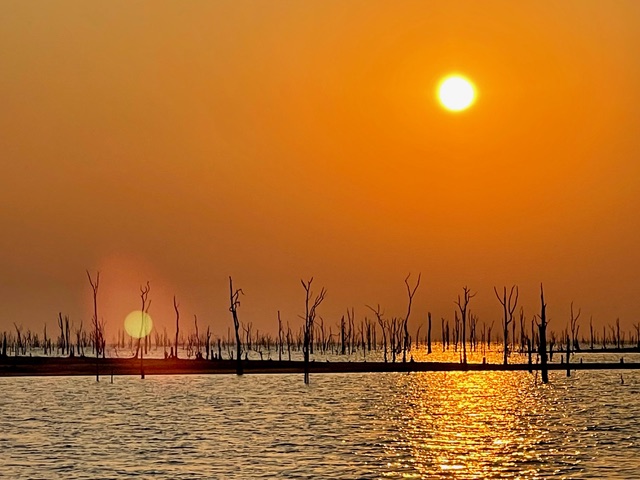
Lake Kariba is one of Zimbo’s most impressive highlights and forms part of the border with Zambia. It’s one of the largest man-made lakes in the world. It covers roughly 5,500 km² and stretches for well over 200 kilometres, with some sections around 40 kilometres wide. The lake was created when the Zambezi River was dammed in the Kariba Gorge.
A short history
Construction of the dam that formed Lake Kariba took place in the late 1950s and early 1960s. Thousands of people were displaced and resettled – a huge social upheaval that still echoes in local stories and memories today. The name “Kariba” is linked to a Shona word that can be translated as “little trap” or “place that catches”, referring to rocks that seemed to “catch” the river before the dam.

Wildlife & ecosystems
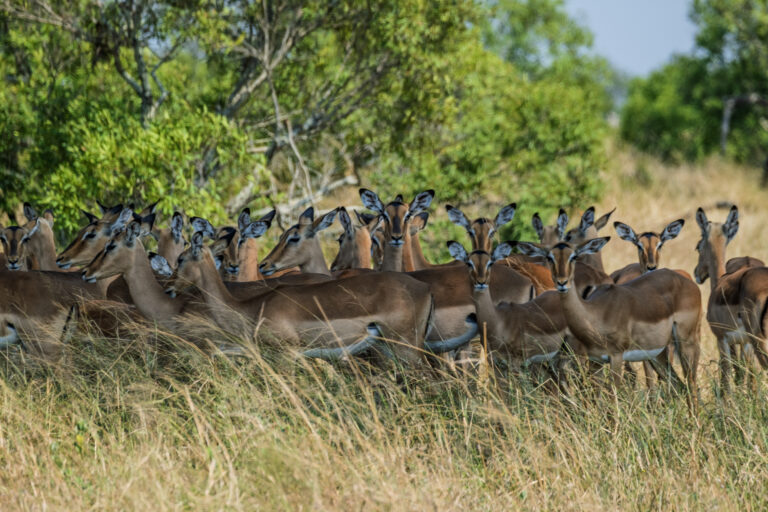
Thanks to its sheer size and the ecosystems around it, Lake Kariba is rich in wildlife and birdlife. Crocodiles and hippos lurk in and around the water, elephants come down to drink at the shore, and overhead you’ll often see fish eagles and cormorants. The lake supports both commercial and small-scale fishing, especially for kapenta – the tiny fish that also appear on local plates.

What it’s like to visit
- Sunset cruises: drift between half-submerged tree trunks as the sky turns orange and pink.
- Houseboats & lakeside lodges: fall asleep to gentle waves and distant bush sounds.
- Game drives & bush walks: combine big water views with classic safari moments.
- Fishing trips: try your luck with local species – and taste the catch later.


Why Lake Kariba stays with you
- The sheer scale – knowing you’re on a man-made lake this size is mind-blowing.
- The mix of water and wildlife – elephants on the banks, birds on the hunt, islands on the horizon.
- The story behind it – a bold engineering project that reshaped both land and lives, and the way nature has adapted since.
Practical tips
- Aim for the dry, cooler months for more comfortable temperatures and better wildlife viewing.
- Book at least one sunset boat trip – the light over the water is unforgettable.
- Pack solid sun protection and a pair of binoculars – the sun on the water can be intense.
- Stay by the lake if you can – on a houseboat or in a lodge – to really feel the rhythm of the water.
- Respect the environment: take your rubbish with you and keep noise low.
- Try fresh local fish while you’re there – a tasty link between Lake Kariba and Zimbo’s wider food culture.


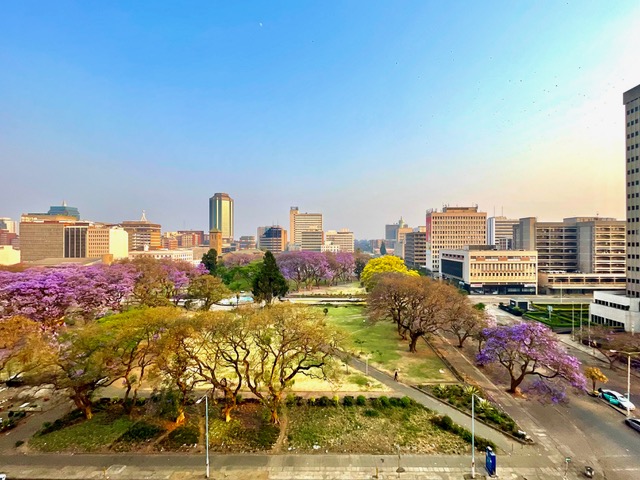
Harare, capital of Zimbabwe…
…the buzzing heartbeat of Zim, deserves a spot on every Africa lover’s list
Where Bulawayo feels laid-back and old-soul, Harare is all energy: jacaranda-lined avenues, colourful markets, busy street life and a growing cafe & art scene. Think fresh fruit stalls, music spilling out of minibuses and that warm Zimbabwean friendliness on every corner.
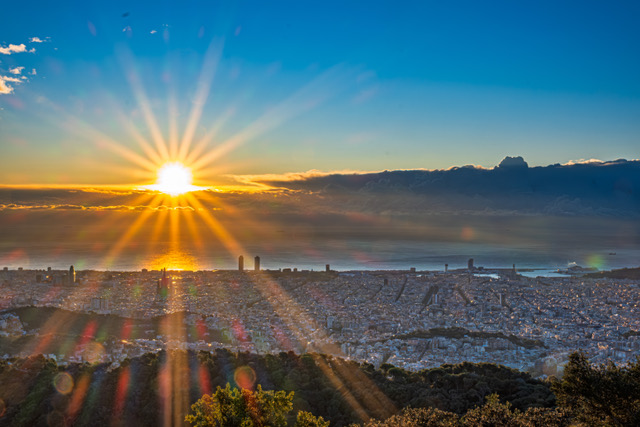
Just beyond the city you’ll find rolling highveld landscapes, viewpoints for golden sunsets and routes leading towards Zimbabwe’s famous national parks.
If you’re into vibrant cities, local flavours and real everyday life, Harare is the place to dive in: chat with vendors, try the street food, visit a gallery, and feel the pulse of modern Zimbabwe.
Bulawayo, a.k.a. the City of Kings
Zimbabwe’s second city blends wide, historic streets and beautiful colonial-era architecture with a laid-back, creative vibe. Think sun-soaked avenues, cafes buzzing with conversation, street art, craft markets and that big-sky Matabeleland light.
Just outside the city you’ve got Matobo National Park on your doorstep – granite hills, ancient rock art and some of the most magical sunsets you’ll ever see.
If you love places with real character, rich history and a vibrant arts scene, put Bulawayo on your Africa wish list. This is a city to wander slowly, talk to locals, eat something new… and stay longer than you planned.