Pure passion as Andalusian heritage
Seville’s culinary heritage is what happens when a hot, fertile river city spends two thousand years at the crossroads of empires – and then serves the results in small plates. To understand why a tapa of espinacas con garbanzos or a paper cone of pescaíto frito feels so “Sevillano”, you have to look at the land, the history and the cultures that shaped it. So yes, it’s quite a heritage, so let me guide you to what defines Seville on the palate!
CLICK HERE if you’re in a hurry to read all about Seville’s culinary heritage. Otherwise let’s first take a look around this passionate Andalusian city.
Seville is one of those cities that gets under your skin fast: orange trees in the streets, tiles catching the light, guitar music echoing from somewhere just out of sight. It’s walkable, warm and full of corners where layers of Moorish, Christian and modern Spain sit on top of each other. If you’re planning a first visit, these are -to my opinion- the highlights and must-see spots that really capture the essence of this vibrant city in the heart of Andalusia.
The golden triangle: Cathedral, Giralda & Alcázar
Right in the heart of the old town you’ll find Seville’s “golden triangle”: the Cathedral, the Giralda tower and the Real Alcázar. Together with the nearby Archivo de Indias, they form a UNESCO World Heritage ensemble and pretty much define Seville’s skyline.
The Cathedral of Santa María de la Sede is the largest Gothic church in Europe, built on the site of the former Great Mosque. Step inside for the vast nave, the glittering altarpiece and the (hotly debated) tomb of Christopher Columbus. Then climb the Giralda, originally the mosque’s minaret and later turned into a bell tower. Its ramps spiral you up to one of the best viewpoints in the city.
Across the square is the Real Alcázar, a royal palace where Islamic, Gothic and Renaissance influences melt into each other: filigree stucco, carved wooden ceilings, tiled patios and gardens full of fountains and orange trees. It’s still used by the Spanish royal family when they’re in town, but most days you’ll be sharing it with peacocks and fellow visitors.
Getting lost in Barrio Santa Cruz
Behind the cathedral spreads Barrio Santa Cruz, the old Jewish quarter: a maze of narrow lanes, whitewashed houses and intimate little squares. It’s touristy, yes, but also genuinely atmospheric if you duck a block or two away from the main routes. Cafés and tapas bars spill out onto the pavements, balconies drip with flowers and you’ll constantly stumble on tiny plazas that feel like stage sets.
This is a great area to wander with no plan: follow the shade, stop for a cold cerveza and a plate of jamón, and let the bells of the Giralda guide you back if you get turned around.
Plaza de España & María Luisa Park
Seville’s most photogenic spot might be the Plaza de España, built for the 1929 Ibero-American Exposition. It’s a huge, semi-circular complex with bridges over a canal, tiled alcoves representing each Spanish province and a palace-like façade that glows at sunrise and sunset.
The plaza sits inside Parque de María Luisa, a lush green park with palm trees, fountains, pavilions and shady paths – perfect for a slow wander (or a break from the summer heat). Between the park and the plaza, this is where you really feel Seville’s mix of grand architecture and relaxed, outdoor life.
Metropol Parasol (Las Setas): Seville’s modern side
For a jump into the 21st century, head to Metropol Parasol, known locally as Las Setas (the mushrooms). This giant wooden structure hovers over Plaza de la Encarnación, often described as the largest wooden construction in the world. Here you’ll find the newest food market of Seville.
Take the lift up to the viewing deck and walk the snaking pathways above the roofs for wide views over the historic centre. Time it for sunset if you can: the light on the rooftops and the distant silhouette of the cathedral is spectacular.
Seville food markets
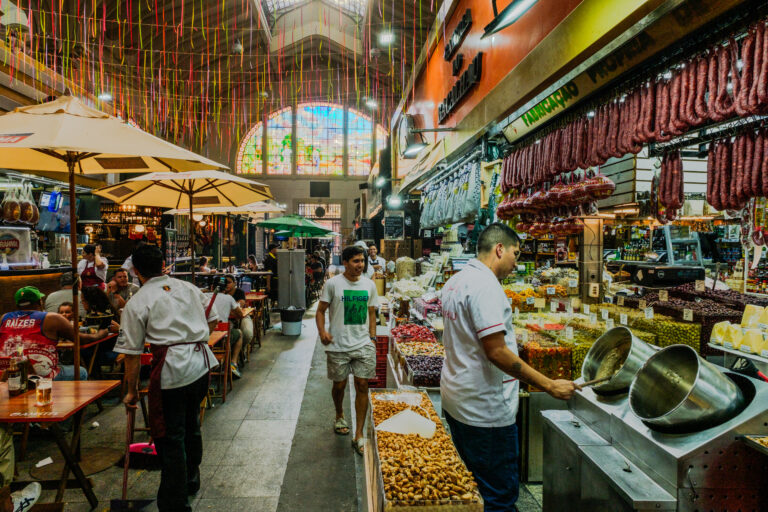
If your time in Seville is limited, combine Las Setas with the food market at Plaza de la Encarnación. It’s Seville’s newest. Or go to the Mercado Triana, on top of the remains of a medieval Moorish castle. If you have a little more time go for a traditional market in Seville. The Mercado de Feria is the oldest market in Seville, a lively part of the city since it was established in 1719. Last, but not least: Mercado de Los Remedios is pretty much only used by locals. It’s tucked away in the non-touristic Los Remedios neighbourhood. This market is perfect if you want to experience an authentic slice of Seville life with few tourists around. A great place to visit if you want a genuine local experience.
Across the river: Triana & the Guadalquivir
Cross the Puente de Triana over the Guadalquivir River and you’re in Triana, traditionally a neighbourhood of sailors, potters and flamenco. Today it feels like a village within the city: tiled facades, local bars, and the Mercado de Triana food market sitting on top of the remains of a medieval castle.
Stroll the riverfront promenade for views back towards the Torre del Oro and the old town, then dive into side streets for tapas – Triana is a great place to try fried fish, croquetas and other Andalusian classics in a more local setting.
Flamenco: music, movement and emotion
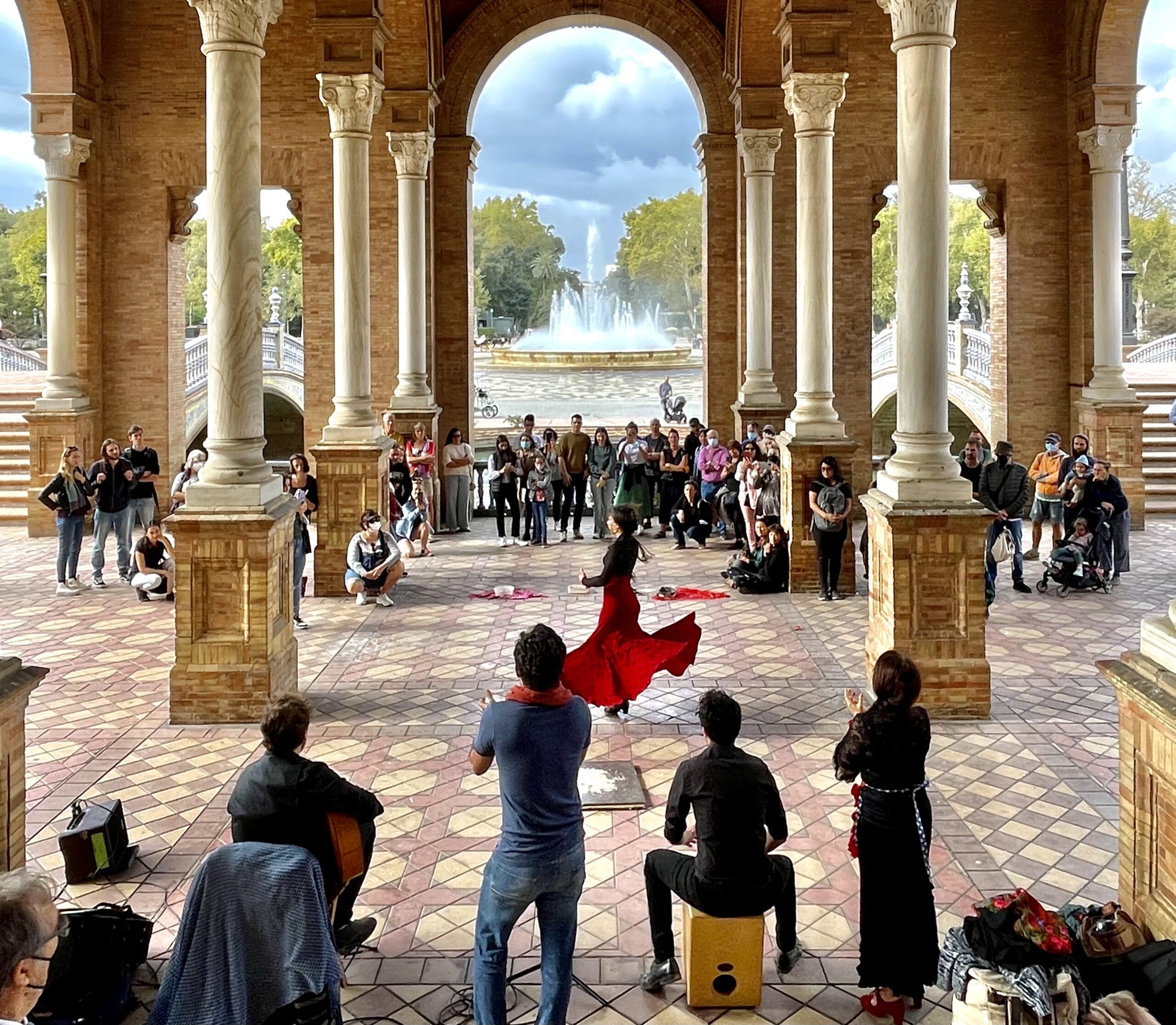
Seville is one of the spiritual homes of flamenco, and catching a live performance is almost a must. You’ll find everything from touristy shows to intimate tablaos where the room is small, the lights are low and the emotion feels raw.
Look out for venues in Triana and Santa Cruz, or check cultural centres that host shorter, more traditional shows. A good rule: if there’s more music than microphones and more locals than selfie sticks, you’re probably in the right place.
Museums & quieter corners
If you want a dose of art and history away from the heat, the Museo de Bellas Artes (Museum of Fine Arts) is a gem: a former convent filled with Spanish painting, including major works by Murillo, Zurbarán and others, and a peaceful cloistered courtyard.
Also worth a quick stop near the cathedral is the Archivo de Indias, a Renaissance building that houses documents from Spain’s colonial empire and completes the UNESCO trio. The exhibits are fairly low-key, but the architecture and quiet atmosphere make it a nice counterpoint to the crowds outside.


The culinary heritage of Seville
A city fed by river, orchards and olive groves
Seville sits inland on the Guadalquivir River, but close enough to the Atlantic to have always been a port and a trading hub. The wider Andalusian region combines fertile plains, river valleys, mountains and coastline, which means access to wheat, olives, grapes, vegetables, fruit and fish within a relatively small radius.
This geography underpins the classic Andalusian pantry:
- Olive oil as the main fat
- Durum wheat for bread and later pasta
- Vegetables and pulses (tomatoes, peppers, aubergines, chickpeas, lentils)
- Citrus and almonds
- River and coastal fish
Seville’s heat did the rest. Long, intense summers favoured cold dishes like gazpacho and salmorejo and encouraged the tradition of eating late, when the city finally cools down.
Historical layers on the plate
Roman Hispalis: wheat, wine, oil and fried fish
Under Rome, Seville (then Hispalis) and nearby Italica were key centres of olive oil and wheat production. Roman food culture revolved around bread, wine and oil, with vegetables, legumes and fish for the masses and elaborate dishes for the elite.
The Roman habit of frying fish in olive oil is well documented and is considered one of the ancestors of today’s pescado/pescaíto frito – small fish dusted in flour, deep-fried and eaten hot with just salt and lemon. That simple technique has survived almost unchanged and is now one of Seville’s most emblematic street foods.
Al-Andalus: irrigation, spices and the Arab agricultural revolution
From 711 to 1248 Seville belonged to al-Andalus, the Islamic-ruled territory that covered much of the Iberian Peninsula. This period transformed both agriculture and cuisine. Scholars talk about an “Arab agricultural revolution”: advanced irrigation systems, new crop rotations and the introduction of plants such as citrus, rice, sugarcane, spinach, aubergine, artichokes and many aromatic herbs and spices.
These crops and techniques gave the region:
- Citrus groves and orange-lined streets
- A tradition of almond- and honey-based sweets
- The habit of combining vegetables and legumes into spiced stews – a clear ancestor of dishes like espinacas con garbanzos.
The Andalusi kitchen also favoured fragrant spices, slow-cooked dishes and a balance of sweet–savoury flavours, traces of which you can still taste in some Sevillian recipes.
Christian Seville, New World foods and pork
When Ferdinand III conquered Seville in 1248, churches and convents began shaping food as much as mosques and palaces had done before. Pork, which had been absent under Islamic rule, became a marker of Christian identity, and cured products like jamón, chorizo and lomo became central to the diet.
From the 16th century onward, Seville served as Spain’s main port to the Americas, channelling new ingredients like tomatoes, peppers, potatoes and cacao into Europe. Over time, tomatoes and peppers became essential to Andalusian cooking, giving us:
- Gazpacho and salmorejo – chilled tomato soups thickened with bread and enriched with olive oil.
- Paprika-based adobos and stews, including rabo de toro (oxtail).
Religious calendars also left a deep imprint. Lent and meatless Fridays encouraged rich dishes based on chickpeas, spinach and salt cod, like espinacas con garbanzos and various cod stews.
Tapas: Seville’s social invention
Although tapas are now found all over Spain, many food historians and local guides agree that their modern form began in Seville and Andalusia’s taverns.
The word tapa (“lid”) hints at practical origins: small pieces of bread, ham or cheese used to cover a glass of wine and keep out dust or flies. A 1795 regulation in Seville allowed taverns serving wine by the glass to also offer small cold or fried foods – but not stews – formalising the idea of a drink accompanied by a bite.
Over time, this grew into a full tapas culture:
- Bars lining counters with cold dishes (ensaladilla, jamón, queso)
- Hot items coming fresh from the kitchen (croquetas, pescaito frito, espinacas con garbanzos)
- People grazing from bar to bar, turning eating into a social circuit rather than a single sit-down meal
Tapas were shaped not just by appetite but by politics and economics: modest portions made food affordable for workers, while strict licensing laws and guild systems influenced what could be sold where. Today, tapas are one of Seville’s biggest cultural exports, but they still feel rooted in local neighbourhoods and habits.
Signature Sevillian dishes as edible history
Salmorejo & gazpacho: heat, gardens and the New World
Gazpacho and its thicker cousin salmorejo are Seville’s edible answer to summer. These cold soups blend tomatoes, bread, olive oil, garlic and vinegar (with egg and ham on top for salmorejo) into something halfway between a drink and a dish.
They reflect:
- The New World tomatoes and peppers that became staples after the 16th century
- The region’s vegetable gardens and olive oil wealth
- The need for refreshing, hydrating food in extreme heat
Pescaíto frito & freidurías: fast food, Sevillian style
Seville has turned fried fish into an art form. Pescaíto frito – little fish like anchovies, hake or cuttlefish, floured and deep-fried in olive oil – is a legacy of Roman and Moorish frying techniques, adapted to the city’s access to both river and Atlantic fish.
Specialised shops called freidurías serve the fish in paper cones, a kind of local high-quality fast food popular in neighbourhoods like Triana, historically home to sailors and fisherfolk.
Espinacas con garbanzos: Moorish, Jewish and Christian threads
Few dishes tell Seville’s layered story as clearly as espinacas con garbanzos, a spinach and chickpea stew scented with cumin, garlic and paprika.
- Spinach arrived via Persia and Arab traders and became important in Moorish and Sephardic kitchens.
- Chickpeas were a staple of both Islamic and Jewish diets.
- The dish became especially associated with Lent, when meatless but nourishing dishes were needed.
Today it’s a classic tapa in bars like El Rinconcillo, often cited as Seville’s oldest tavern, and a textbook example of how Moorish spices, Jewish tradition and Catholic ritual ended up in one humble clay dish.
Pork, stews and bar counters
Seville also celebrates the Iberian pig in all its forms:
- Jamón ibérico hangs from bar ceilings
- Montaditos (small sandwiches) are filled with chorizo, lomo or pringá (pulled meat from stews)
- Rabo de toro (oxtail stew), linked to bullfighting culture, is slow-cooked in wine and vegetables.
These dishes speak to rural Andalusian traditions, the importance of livestock and the city’s long connection to bullfighting and tavern life.
Sweets of faith and festival
Religion also flavours Seville’s sweet tooth. During Semana Santa (Holy Week), the city fills with torrijas – slices of bread soaked in milk or wine, dipped in egg, fried and coated in honey or sugar – and pestiños, small pastries flavoured with sesame and anise, fried and glazed with honey.
These desserts, often made at home or in convents, show the Moorish heritage of honey, olive oil and spices combined with Christian festival calendars. Many traditional bars with close ties to religious brotherhoods – the tabernas cofrades– still highlight meatless tapas like cod dishes and espinacas con garbanzos during Lent, reinforcing the link between faith, ritual and food.
Contemporary Seville: tradition, tourism and creative chefs
Today, Seville’s food scene moves on a spectrum from old taverns to avant-garde kitchens. Historic spots like El Rinconcillo serve classic tapas in rooms lined with dusty wine bottles and ceramic tiles, while contemporary restaurants experiment with local ingredients in tasting menus and updated plating.
Several forces are shaping the current culinary landscape:
- Tourism has turned tapas into a global brand, but it has also created pressure to standardise and simplify.
- Local pride and slow-food movements push back by highlighting small producers, sherries from nearby Jerez, and seasonal produce.
- Environmental concerns are raising interest in sustainable fishing and regenerative olive farming.
Yet even in the most modern venues, the backbone remains recognisably Sevillian: olive oil, tomatoes, chickpeas, fried fish, pork, oranges, almonds and spices seasoned with centuries of history.
In the end: a living, layered kitchen
Seville’s culinary heritage is not a museum piece; it’s a living negotiation between land, history and daily life.
- Rome contributed olive oil, wine and fried fish.
- Al-Andalus brought irrigation, citrus, sugar, almonds, spinach and spices.
- Christian and Jewish communities layered on pork rituals, meatless Lenten dishes and festival sweets.
- The Americas added tomatoes, peppers and new ways of eating vegetables.
- Taverns and bars turned all of this into tapas, a social way of eating that defines the city today.
When you stand at a bar in Seville with a glass of chilled sherry, a cone of pescaíto, a plate of espinacas con garbanzos and a slice of torrija for dessert, you’re not just snacking – you’re tasting a city that has been blending cultures, climates and politics into flavour for almost two millennia.
And… don’t forget to visit one of the food markets in Seville. These are my 4 favorites. As a good food market tends to do, they all serve you Seville’s culinary heritage unplugged!