A culinary journey to home
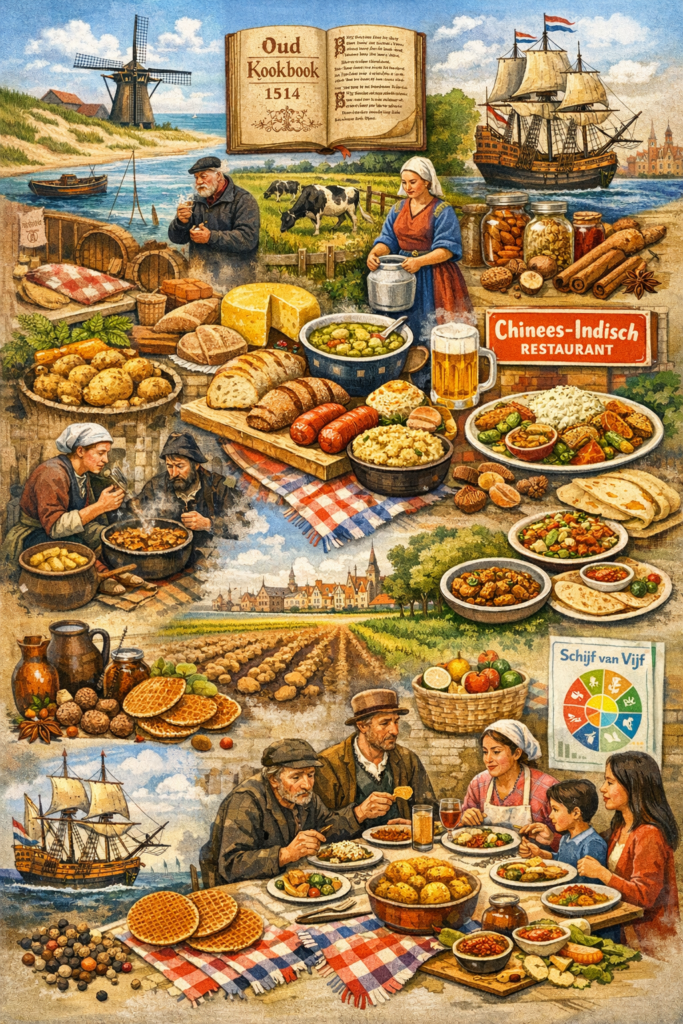
People in the Netherlands speak Dutch and the whole world says we come from Holland… Confused? I can imagine, because there seems to be no logical connection in that naming. But this tiny European country has a huge historical and cultural heritage… And that’s where you’ll find the answers to the origins of words. They’re as complex as the Dutch culinary heritage, which you can only start to understand by getting into the history and culture.
The Netherlands might be small on the map, but it’s got a lot going on. In a few hours, you can go from the North Sea dunes to the river polders, from the old trading cities to the dairy meadows. Each landscape has its own unique impact on the food you end up with. And yes, there’s that well-known Dutch saying about not eating what you don’t know… But Dutch food culture has always been influenced by what arrived from elsewhere too — through trade, travel, migration and curiosity.
This is Dutch Culinary Heritage as Culin-Air Travel sees it: not as a list of dishes from a museum, but as a living story where food, place and culture keep reflecting each other – sometimes quietly, sometimes with fireworks.
A somewhat different blog
Unlike most of the other blogs here, this story is a culinary journey of discovery through my home. It’s a project that will deepen, expand, and refine its details over time. I’ll also be adding photos along the way, but the pictures of my own home span many years and aren’t as compact as those from a focused trip…
The Dutch way
Dutch food isn’t just about one “grand national dish”. It’s all about habits and rituals:
- Breakfast and lunch were bread-based, with warm food being served later in the day (this changed over time).
- A love of dairy – milk, butter and cheese – that’s all about the agricultural landscape
In the winter, we like our food thick and hearty, with soups and mash, and a smoky flavour. In the summer, we like to eat fresh, light meals, like salads and pickles.
The Dutch are really good at preserving stuff – pickling, salting, smoking, drying. Back in the day, the seasons were a big deal. But the thing that probably defines the Dutch the most is how their food is always changing. They take all these different influences and make them feel like they’ve always been a part of their cuisine.
1. Where it all began: land, water, grain—and the Roman pantry
The earliest written records of eating in what we now call the Netherlands include accounts from the Roman period, when the southern Low Countries were connected to the Roman world through frontier towns and trade routes. Farming, livestock, grains, river fish, foraged fruits and nuts: it’s a practical pantry, driven by what the land can give and what the water can provide.
Even today, that “delta logic” still explains a lot:
- Milk-producing landscapes that are great for growing natural cheese cultures
- Fishing villages with a long history of fishing that is now turned into street food
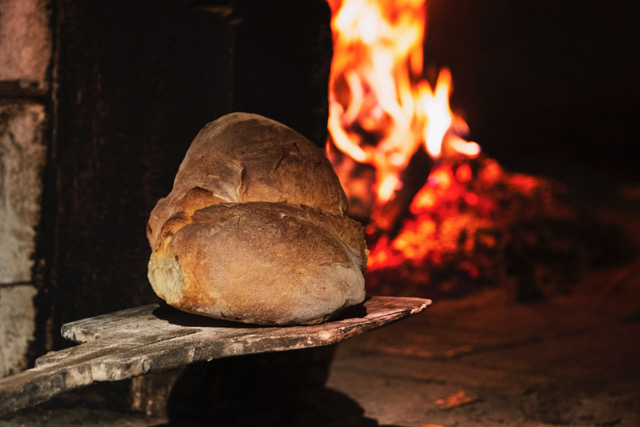
- Grain and bread were a reliable daily energy source
2. The Middle Ages: the one-pot meal vs. the spice theatre
In medieval life, the table looked different depending on your budget.
For a lot of people, the kitchen was all about simple staples: porridge, rye bread, legumes, onions, a few herbs – often cooked from one pot because that’s what the home had. It was filling, cheap, and you could just keep on using it.
The rich also had food on display. There was more meat and richer dairy, but the real deal was spice – imported, expensive and therefore powerful. Cinnamon, ginger, nutmeg and sugar weren’t just about the taste; they represented status, trade and worldview.
Drinks were pretty much the same. Light beers were all the rage and super convenient, while wine was seen as something you could only drink on special occasions.
3. A big moment in print: the first Dutch cookbook (c.1514)
One of the most real-world heritage moments is the oldest surviving printed Dutch-language cookbook: This is a really interesting book about cooking. It was published around 1514 by a guy called Thomas van der Noot. The KB (National Library of the Netherlands) says it’s an anonymous book, clearly aimed at a wealthy audience, full of recipes using expensive ingredients typical of late-medieval festive cooking.
For a Culin-Air traveller, this is important because it proves something key: Dutch food history isn’t just “simple and sober”. There’s always been this other tradition of celebratory cooking, like banquets, pastries, sauces, fancy fish and meat dishes, whenever there’s enough money for it.
4. Ships, spices and a sweet Dutch aftertaste
The Netherlands’ trading history had a really direct impact on taste. The VOC (Dutch East India Company) was really involved in the spice trade, and at one point they had a monopoly on nutmeg, mace and cloves.
That legacy is still very much alive and kicking in a very Dutch comfort zone: spiced baking. Think speculaas, pepernoten/kruidnoten, ontbijtkoek—flavours that feel cosy now, but once represented global reach and rare ingredients.
And, to be honest, those trade systems also involved coercion and violence. The beauty of flavour and the brutality of history can exist in the same chapter – and a good culinary story doesn’t pretend otherwise.
5. The potato arrives: from novelty to national staple
After the great wave of global exchanges, one ingredient slowly became the everyday anchor: the potato, which was increasingly important from the 18th century onwards.
From there, it’s just a short walk to the most well-known Dutch home format:
Potatoes, veg and meat (if you can afford it).
Stamppot is a great example of comfort food. It’s basically mashed potatoes, and it’s often served with thick winter soups, like pea soup and snert. This is a great way to experience the Dutch daily heritage.
6. The 20th century: home-schooling, health and “normal food”
Modern Dutch food culture was strongly shaped by the idea of economical, sensible cooking, which was reinforced through home education (including household schools). Values such as frugality, manners and healthy meals were central to this.
And in that same spirit, the Schijf van Vijf became a public guide for balanced eating – it was introduced in 1953 and is still evolving today.
You know, culinary heritage isn’t just about recipes. It’s also about the moral side of things: don’t waste, don’t overdo it, eat “properly”, keep it balanced.
7. Migration made it richer: Indonesian, Chinese-Indies, Surinamese—and beyond
If you want to understand what people in the Netherlands actually eat today, you have to look at the food cultures that became a part of daily life in the second half of the 20th century.
Indonesian influences
Indonesian food has become a regular feature on Dutch kitchen tables, often adapted to suit local tastes, but with its roots still firmly planted in family stories and shared history.
Chinese-Indies: officially heritage
The Chinese-Indies restaurant is one of the most interesting Dutch food places: a cuisine-space where Chinese, Indonesian and Dutch preferences meet. It’s become such a cultural fixture that it’s officially recognised as part of Dutch intangible heritage.
Surinamese presence
Surinamese dishes also became a part of the national food scene, adding another layer to what “comfort food” can mean in a Dutch city.
Then, in the late 20th century, things really picked up speed. The food’s got a real mix of Mediterranean, Middle Eastern, Indian and North African influences, and the Dutch are pretty good at fusion too – sometimes brilliant, sometimes a bit too bold.
What Dutch Culinary Heritage tastes like (in six bites)
If you’re travelling Culin-Air style – beyond “just tasting”, towards the story – these are some great ways to get started:
- A market morning is the perfect time to find fresh fish, warm stroopwafels, seasonal produce and a cheese counter. A look at what Dutch people eat every day.
- Get a real feel for cheese culture
It’s not just a photo op – you’ll get to meet the producers, taste how maturation affects the milk, and hear how the landscape and soil affect it. - The coast on paper (and in your hands)
Herring stalls, fried fish, shrimp: simple formats, deep roots. - Winter in a bowl
Pea soup/shert with rye bread and smoked notes: a really clear example of the changing seasons. - “Going to the Chinese” is a proper Dutch tradition, isn’t it?
Because it really is – it’s a proper heritage thing, with proper stories and all. - A modern Dutch menu that still celebrates the past
Chefs use local veg, North Sea fish and preserved elements, but plate them up with a contemporary twist.
A long weekend in Dutch Culinary Heritage
If you’re travelling around the Netherlands, there’s so much to see and do. But compared to most other countries, it’s pretty small, so you can fit a lot in if you’re short on time. From a culinary heritage perspective, we’re not interested in the usual tourist hot spots like the tulip fields or the red light district 😁. Even though these areas can still tell you a lot about Dutch culinary habits from a cultural point of view.
A small guideline to plan your visit:
Day 1 — City layers: trade, taste, migration
- A quick look at the market in the morning (keep an eye on the season)
- Visit one of the many museums that will give you impression of the rich cultural history or a stroll around the neighbourhood that looks at how the city has traded over time.
- Dinner: Indonesian/Indies-inspired, because heritage isn’t only “old Dutch”. It’s also what became Dutch.
Day 2 — Polder & Dairy: where the landscape becomes flavour
- Go and see a producer of cheese, butter or farmhouse dairy.
- Lunch options include simple bread-based classics, prepared to a high standard (Dutch bread culture is a whole world of its own).
- Explore in the afternoon how wind, water and dikes are all connected to the food story, because the two are inseparable.
- Book a performance in music or dance and experience the high standard of artistic quality and diversity in culture.
Day 3 — Sea air & Street food and snack culture
- Coastal fish experience (herring/fried fish)
- A “brown café” moment with classic bar snacks
- End the evening with a modern Dutch tasting menu that brings heritage into the present
Some handy tips to help you explore the heritage lands properly.
Make sure you come hungry, but don’t go too fast. Dutch food culture includes lots of little snacks and meals throughout the day, like coffee breaks and snacks.
There’s a big difference between winter and summer. Winter is all about hearty soups, mashed potatoes and smoked meats; while summer is all about fresh seafood and local markets.
Ask them why they’ve chosen this dish. In the Netherlands, it’s often down to the geography: sea, river, clay, peat, pasture.
Don’t forget to include the “everyday heritage” in your plans. You can learn a lot about a culture from a Chinese-Indies meal, a herring stall or even a simple dairy dessert, just as much as you can from fine dining.
To sum things up: you can experience heritage in one country through a thousand stories.
Dutch Culinary Heritage may appear modest at first, but it’s actually very diverse. It includes a multi cultural pantry, medieval contrasts, early printed cookery, spice trails, comforting spuds, post-war health ideals, and migration cuisines that have become officially part of our culture.
Just so you know, input for this blog comes from the web.
Web sources
- DBNL. (z.d.). Inleiding: Een notabel boecxken van cokeryen. Geraadpleegd van https://www.dbnl.org/tekst/_not001nota01_01/_not001nota01_01_0001.php
- Historisch Nieuwsblad. (2003, 3 februari). De Vooruitgang: In roomboter gebakken spreeuwen. Geraadpleegd van https://www.historischnieuwsblad.nl/de-vooruitgang-in-roomboter-gebakken-spreeuwen/
- Immaterieel Erfgoed Nederland. (z.d.). De Chinees-Indische restaurantcultuur. Geraadpleegd van https://www.immaterieelerfgoed.nl/nl/ChineesIndischeRestaurantcultuur
- Koninklijke Bibliotheek. (z.d.). Een notabel boecxken van cokeryen. Geraadpleegd van https://collecties.kb.nl/themas/koken/kookboeken-de-zestiende-eeuw/een-notabel-boecxken-van-cokeryen
- Universiteit Leiden. (2023, 17 maart). Food destruction and depopulation. How the Dutch East India Company gained a clove monopoly on the Ambon islands. Geraadpleegd van https://www.universiteitleiden.nl/en/news/2023/03/food-destruction-and-depopulation.-how-the-dutch-east-india-company-gained-a-clove-monopoly-on-the-ambon-islands
- Voedingscentrum. (z.d.). De geschiedenis van de Schijf van Vijf. Geraadpleegd van https://www.voedingscentrum.nl/nl/service/vraag-en-antwoord/gezonde-voeding-en-voedingsstoffen/de-geschiedenis-van-de-schijf-van-vijf.aspx
- Western Australian Museum. (z.d.). VOC – United Dutch East India Company. Geraadpleegd van https://museum.wa.gov.au/explore/dirk-hartog/voc-united-dutch-east-india-company
- Wikipedia. (z.d.). Dutch East India Company. Geraadpleegd van https://en.wikipedia.org/wiki/Dutch_East_India_Company
- Wikipedia. (z.d.). Nederlandse eetcultuur. Geraadpleegd van https://nl.wikipedia.org/wiki/Nederlandse_eetcultuur
- Wikipedia. (z.d.). Nederlandse keuken. Geraadpleegd van https://nl.wikipedia.org/wiki/Nederlandse_keuken
- Wereldmuseum Amsterdam. (z.d.). Hoe Chinees is Chinees eten? Geraadpleegd van https://amsterdam.wereldmuseum.nl/nl/wereldverhalen/hoe-chinees-is-chinees-eten
- De Graaf, R. A. (2004, 16 augustus). De rijke Hollandse dis: Eten in de Gouden Eeuw. Radio Nederland Wereldomroep (gearchiveerd). Geraadpleegd van https://web.archive.org/web/20081223110810/http://www.wereldexpat.nl/nl/typischNL/recepten/kookboek_rijksmuseum.htm
Additional literature: recommended books and publications in Dutch:
- Den Hartog, A. P. (Red.). (2001). De voeding van Nederland in de twintigste eeuw: Balans van honderd jaar werken aan voeding en gezondheid. Wageningen.
- Groeneveld, K. (2019). Kookboek van de middeleeuwen: Specerijen, pasteien & vasten. Vleuten: Uitgeverij Het Zwarte Schaap.
- Jobse-van Putten, J. (1996). Eenvoudig maar voedzaam: Cultuurgeschiedenis van de dagelijkse maaltijd in Nederland. Nijmegen.
- Meerman, J. (2015). Kleine geschiedenis van de Nederlandse keuken. Ambo|Anthos.
- Muusers, C. (2016). Het verleden op je bord. Uithoorn: Karakter Uitgevers B.V.
- Schot, J. W., et al. (Red.). (2003). Techniek in Nederland in de twintigste eeuw, Deel III: Landbouw, Voeding. Zutphen.
- Van Dam, J. (2005). DikkeVanDam. Amsterdam: Nijgh & Van Ditmar.
- Van der Vlis, I. (2003). In roomboter gebakken spreeuwen. Historisch Nieuwsblad, 1/2003.
- Van Otterloo, A. H. (1990). Eten en eetlust in Nederland (1840–1990): Een historisch-sociologische studie. Amsterdam.
- Van Winter, J. M. (1976). Van Soeter Cokene: Recepten uit de oudheid en middeleeuwen. Haarlem.
- Willebrands, M. (2006). De verstandige kok. Bussum.