Visiting Bari, Gravina & Altamura in Puglia

In March 2025 I spent five unforgettable days in Puglia, invited to join the Geoparca della Murgia Tour. My journey started in Bari, where I checked into the Oriente Hotel and stepped straight into the historic centre as the sun went down. Narrow alleys, laundry swinging between balconies, old ladies shaping orecchiette by hand – and everywhere the smell of focaccia, fried seafood and freshly ground coffee. I tasted my way through the old town, from warm bread still smelling of wood oven to creamy burrata and local wines that made it very clear why Puglia has become such a food lover’s destination.

At the Airport I rented a Fiat Cinquecento – because in southern Italy, what else would you drive? – and headed into the countryside. I made a stop at Castel del Monte, that mysterious octagonal fortress rising out of the landscape like something out of a legend, and then left the main roads behind. The smaller lanes took me through olive groves, stony fields and tiny villages until I reached Gravina, perched dramatically above its canyon and now famous for a breathtaking action scene at the Roman aquaduct in the James Bond movie “No Time To Die”.

The Geoparco della Murgia tour really started here. We followed the Water and Stone Trail, visited the archaeological area of Padre Eterno and stood on the 18th-century aqueduct bridge of Madonna della Stella, where history and film blended in the views. A virtual flight with Fly-On VR headsets took us “over” the Gravina canyons, before we returned to the very real Piazza Benedetto XIII and its cathedral. The day wove together herbal liqueur and rosoli tastings, a ceramic workshop, the quiet beauty of the 16th-century Convent of Santa Sofia, a traditional lunch, the vast Pulicchio di Gravina sinkhole, a winery tour with tasting and, finally, an olive oil mill visit that ended in a cooking class and dinner. It felt like Puglia on fast-forward: geology, culture, craftsmanship and food all in one flow.

On the second day Altamura took centre stage. We started with a cheese-making experience – stretching curds, tasting still-warm mozzarella – followed by a visit to a medieval bakery where Altamura bread, with its thick crust and chewy crumb, lived up to its reputation. A walking tour of the historic centre led us past the cathedral and through the claustri, intimate courtyards that suddenly open off the narrow streets. After lunch at a farm-to-table restaurant, we continued to the Pulo di Altamura and the Centro Visite Lamalunga to learn about the “Man of Altamura,” a 200.000 year old prehistoric skeleton preserved in a cave. By the time I drove my little Fiat back through the darkening countryside, I realised this trip was far more than a scenic break: it was an immersion into a landscape where stone, time and taste all tell the same story.
Let the food do the talk
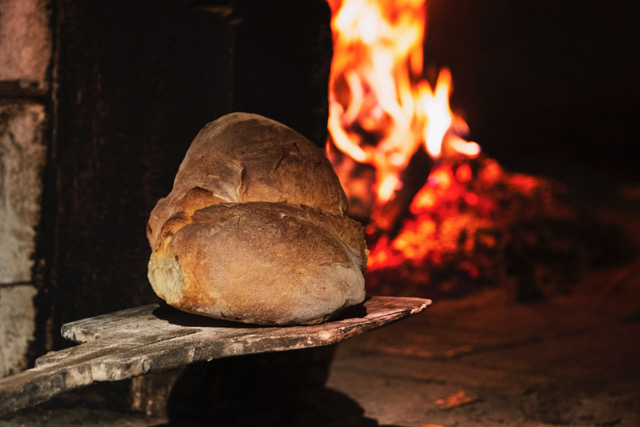
The Murgia area around Gravina, Altamura and Castel del Monte has a really distinctive food culture, shaped by wheat fields, sheep farming and ancient transhumance routes. One of its great icons is Pane di Altamura, a rustic DOP-protected bread made from local durum wheat with a thick, crackling crust and a chewy, straw-coloured crumb – so important locally that its history is traced back to Roman times and it’s the only bread in Europe with PDO status.
More about this Pane di Altamura DOP.
This is classic cucina povera country: hearty soups and stews based on legumes and wild greens, handmade pastas and robust cheeses. The wider Puglia region is famous for orecchiette served with bitter cime di rapa, focaccia barese, fave e cicoria, panzerotti and taralli – simple dishes where durum wheat, olive oil and vegetables do the talking. In the Alta Murgia specifically, sheep have always been central, so you find Canestrato Pugliese – a hard, basket-imprinted sheep’s cheese made from animals grazing the Murgia plateau – alongside grilled and stewed lamb, often paired with intense local olive oil and sturdy red wines.


Pane di Altamura DOP
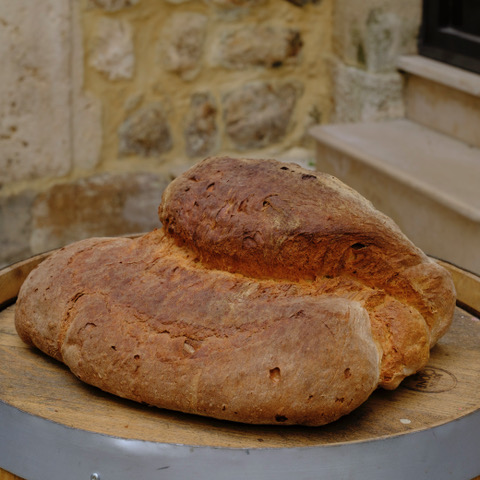
Antico Forno Santa Caterina (since 1391) is the oldest bakery in Altamura. For over 600 years the Pane di Altamura has been baked in the same traditional way. Their maestro panificatoro gave us a demonstration of making the dough for the bread.
This rustic DOP-protected bread made from local durum wheat with a thick, crackling crust and a chewy, straw-coloured crumb – is so important locally that its history is traced back to Roman times and it’s the only bread in Europe with PDO status.
Pane di Altamura is special for a few really concrete reasons – it’s not just “nice bread,” it’s a whole local system in loaf form:
- Protected origin (PDO/DOP) – unique in Europe for bread
It’s the only bread in Europe that has a PDO/DOP status specifically for bread itself (not just for flour or a style). That means:- The wheat must come from a defined area around Altamura.
- The bread has to be produced there, following strict traditional rules.
So when you buy real Pane di Altamura DOP, you’re literally eating that landscape.
- Local durum wheat & natural fermentation
It’s made with 100% local durum wheat (not soft wheat), which gives:- A deep yellow, almost straw-coloured crumb.
- A rich, slightly nutty, sweet flavour.
Traditionally it’s leavened with a natural starter (lievito madre), not industrial yeast, which adds complexity and keeps it fresh longer.
- Thick crust, long keeping, “peasants’ bread” DNA
Pane di Altamura is famous for its very thick, dark, crunchy crust and a moist, elastic crumb. That combo was historically crucial:- The bread could last up to a week without going stale – perfect for shepherds and farmers who baked only once every few days.
- Loaves were large and heavy, often 1–2 kg or more, meant to feed a family.
- Traditional shapes & communal ovens
There are classic shapes (like the “priest’s hat” / cappello del prete), and the loaves were historically marked and baked in communal stone ovens, each family recognising their bread by its mark. That social, communal baking culture is part of what the DOP protects. - Texture & taste in practice
When you eat it, you notice:- A cracking, almost caramelised crust with roasted cereal aromas.
- A chewy, airy crumb that’s great for soups, bruschetta and mopping up sauces.
It’s the kind of bread that turns simple olive oil, tomatoes or cheese into a full meal.
So what makes Pane di Altamura so special?
It’s the combination of place (Murgia plateau), grain (local durum), method (natural fermentation, wood-fired baking), form (thick crust, big loaves) and history (peasant survival food turned protected heritage) – all still alive in every slice.
European PDO status (Protected Designation of Origin)
A PDO (DOP in Italian) is a quality label for agricultural products and foodstuffs that requires every stage of production, processing, and preparation to take place in a specific, defined geographical area. This ensures the product’s quality and characteristics are due to a unique combination of natural and human factors from that region, such as soil, climate, and traditional know-how. Examples include Gorgonzola cheese and Prosciutto di Parma ham.
Key requirements for PDO status
- Defined geographical area: All production, processing, and preparation must occur within a specific region, such as a country, area, or place.
- Unique characteristics: The product’s quality, properties, or reputation must be exclusively or essentially due to its geographical environment.
- Natural and human factors: This includes the region’s climate, soil, and human factors like traditional production methods and local expertise.
- Strict regulations: Producers must follow a rigid, registered set of production rules and specifications.
What PDO status means for consumers and producers
- For consumers: It guarantees authenticity and a link between the product and its origin, assuring consumers of specific, traditional qualities.
- For producers: It protects them from imitations and misuse of their traditional recipes or methods, allowing for premium pricing and creating niche export markets.
- Protection against counterfeiting: The label helps combat counterfeit products and protects the reputation of authentic, local products.
Antico Forno Santa Caterina
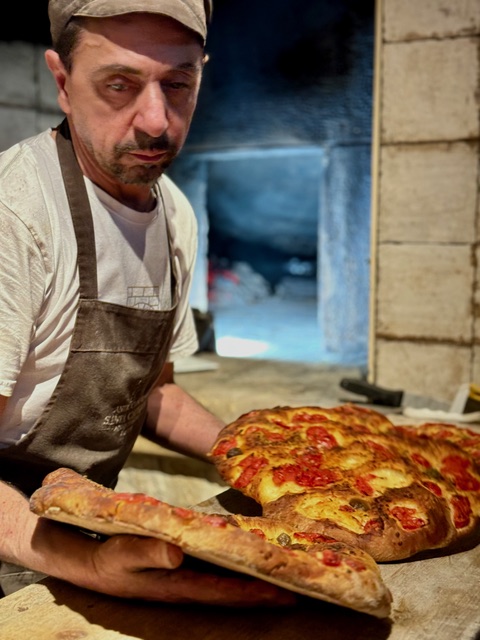
The oldest bakery in Altamura, where for over 600 years the Pane di Altamura has been baked in the same traditional way.
Historically, Antico Forno Santa Caterina sits right at the heart of Altamura’s identity as the “city of bread.” It’s considered the oldest working community oven in town, with origins traced back to the late 14th century (sources mention dates like 1306/1391). For about four centuries it belonged to the Cathedral Chapter and functioned as a public oven, where local women brought their home-kneaded dough to be baked for the whole family. In other words: this wasn’t just a shop, it was basic infrastructure for everyday life.
That role gives the forno huge cultural weight today. It embodies centuries of communal baking and the tradition behind Pane di Altamura – now a DOP-protected bread. After falling silent during the Covid years, the oven was revived by a group of young locals who turned it back into a “forno di comunità,” with workshops and tastings that let visitors knead and bake bread exactly as it’s been done there for hundreds of years.
On top of that, Antico Forno Santa Caterina has become a kind of symbolic ambassador for Altamura: it’s the only bakery in the old centre that belongs to the Pane di Altamura DOP consortium, it still uses its centuries-old wood-fired oven, and it’s been recognised by guides like Gambero Rosso among Italy’s best bakeries.
Their maestro panificatoro gave us a demonstration of making the dough for the bread.