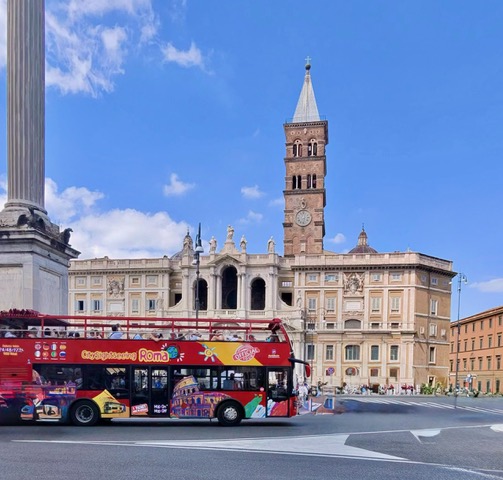
On my way to Abruzzo, had two extra nights in Rome, since it’s where my flight landed. I found an hotel very near to both Termini Railwaystation, on the corner of the Santa Maria Maggiore. Perfect starting point to let Rome introduce itself to me from the top deck of a sightseeing bus. When short in time, the hop-on-hop-off formula brings you close to the most important sights in one day. From my rooftop seat, the city unfolded like a living history book: we rolled past the Colosseum and the Roman Forum, where crumbling arches and columns still outline the heartbeat of the ancient empire. A few stops later, the bus glided by the Circus Maximus and up towards the Palatine Hill, giving me those postcard views of ruins, domes and umbrella pines all in one frame.
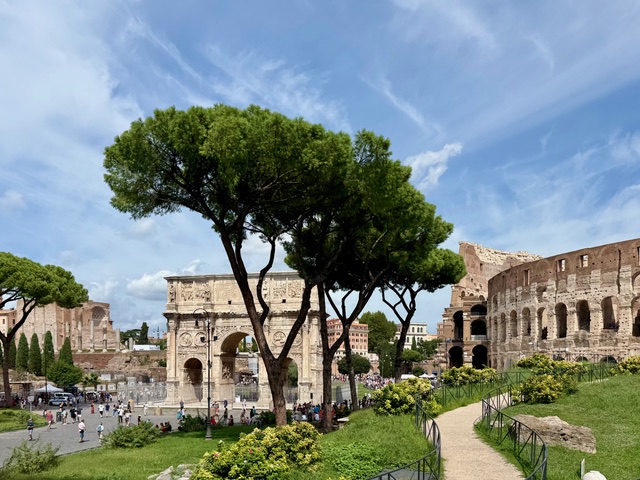
As the route continued, Rome shifted from imperial to baroque and spiritual. We passed the Tiber and hopped off near the Vatican (which I skipped this time), then later rejoined the circuit to see Castel Sant’Angelo, Piazza Navona, the Trevi Fountain and the Spanish Steps. Each stop felt like another chapter: one moment I was staring up at ornate church façades, the next I was weaving through narrow streets for gelato before catching the bus again. My visit to Rome became a relaxed loop of hop-on, hop-off discoveries – a moving balcony over a city that never really stops performing.
The culinary heritage of Rome in a nut shell
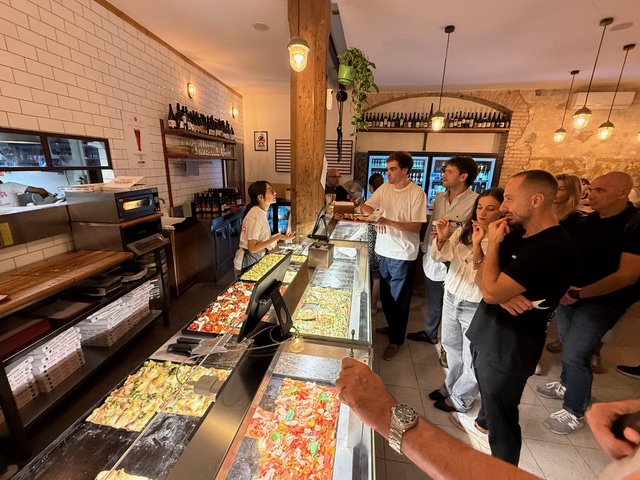
Rome’s culinary heritage is built on cucina povera – simple, clever cooking born from humble ingredients and no waste. Classic dishes like cacio e pepe, amatriciana, carbonara and alla gricia turn pantry staples (pecorino romano, guanciale, black pepper, dried pasta, tomatoes) into pure comfort, while offal-based quinto quarto recipes, Jewish-Roman specialities like carciofi alla giudia, and wood-fired pizza al taglio tell stories of working-class neighbourhoods and centuries of cross-cultural influence.
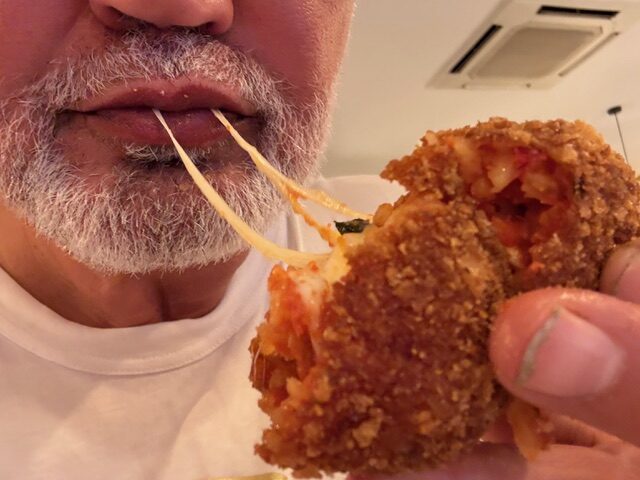
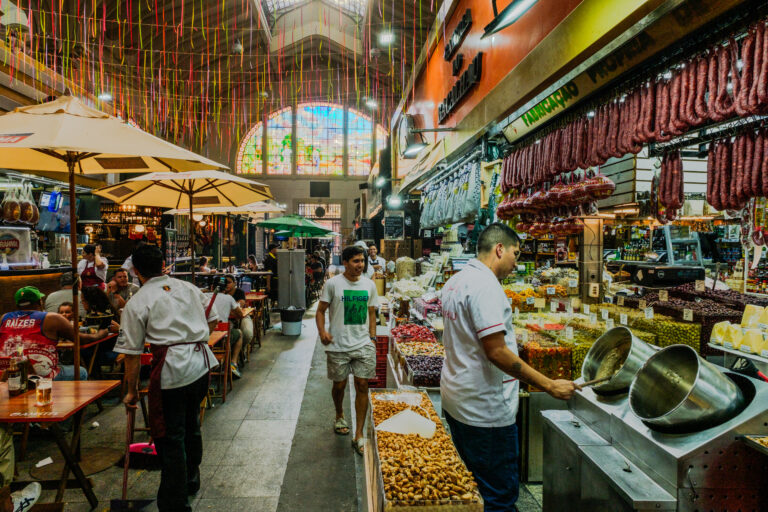
Today, that tradition lives on in a vibrant street food scene. Around markets and backstreets you’ll find locals snacking on supplì (fried rice balls oozing mozzarella), slices of pizza al taglio sold by weight, trapizzino (a stuffed pizza-pocket “sandwich”), crisp fried artichokes in season, porchetta panini and gelato from artisanal labs open late into the night. It’s old Rome in a paper wrapper: the same flavours and frugality, reimagined as quick bites you can eat standing up between one piazza and the next.
And, walking through the warm streets of Rome, I decide to test the gelato pistacchio in the various gelateria’s on my way. Without any doubt Gelateria del Teatro won the private contest. Fully artisanal, with both perfect classics pistachio and hazelnut. Near Piazza Navona / Castel Sant’Angelo.
Skip the photo’s and read more about the culinary heritage vs culinary history.


Culinary heritage vs culinary history
Of course, the culinary history of Rome is so much more what you can taste today in the streets of this history drenched capital of Italy. That is the story of how people cooked and ate in the past – the events, ingredients, recipes and habits through time. Culinary heritage is the part of that story we still live today – the traditional dishes, products and food customs that are kept alive and passed from one generation to the next.
Like Roman arts, the culinary heritage is influenced by so many more elements of the Roman culture. To truly understand the food that you can find in Rome today, let me introduce you a little to the foundations of the history of Roman food from a cultural point of view.
Two-thousand years of Roman culinary history
1. Ancient Rome: banquets, power and the art of display
2. From empire to papal city: feasts, frescoes and public ritual
3. The Jewish Ghetto: survival cuisine and the art of resilience
4. Pasta, trattorie and the cinema of everyday life
5. Street food, contemporary art and the global city
6. Culture on the plate: what Roman food tells us about Roman arts
7. Summary

1. Ancient Rome: banquets, power and the art of display
In ancient Rome, eating was never just about calories; it was a performance of power and civilisation. Elite banquets doubled as theatre, with couches arranged in U-shape, courses paraded like scenes in a play and diners framed by wall paintings and mosaics. Many of those mosaics – think of intricate images of fish, game and fruit – are essentially the first Roman “food photography,” immortalising what appeared on the table as a marker of status and abundance.
Literature and philosophy joined in. Satirists mocked gluttony, while writers like Pliny described rare foods with almost curatorial care. Cookbooks such as the one attributed to Apicius blur the line between recipe collection and cultural document: they read like scripts for extravagant banquets, showcasing how the empire digested the tastes of Greece, the East and its own provinces. Food, in other words, was a medium through which Rome absorbed and re-staged the world – and its art captured that performance in stone, paint and ink.
At the other end of the social scale, simple fare based on grains, legumes and vegetables shaped the daily life of ordinary Romans. That contrast – painted banquets for the rich, humble stews for everyone else – already reveals the tension that will define Roman food culture for centuries: a city equally capable of spectacle and frugality, in art as in the kitchen.
What was being served back then?
The foundations of Roman food culture were laid in antiquity. For most people, the diet revolved around the “Mediterranean triad”: grain, olives and grapes – bread or porridge, olive oil and wine.
- Grains (usually wheat or barley) were eaten as flatbreads or as puls, a kind of thick porridge, especially among the poor.
- Vegetables and legumes – cabbages, onions, leeks, beans, lentils and chickpeas – filled out the diet.
- Meat and fish marked status: the elite ate pork, game and abundant seafood; the poor had them rarely, often as scraps or preserved.
Our main written window onto elite cuisine is Apicius, a late Roman collection of recipes that reads like the ancestor of haute cuisine: stuffed dormice, honey-sweetened sauces, and the famous garum – a fermented fish sauce poured into almost everything, from meats to vegetables. This is not how ordinary people ate, but it shows a culture that loved bold flavour, complex seasoning and showmanship at the table.
At the same time, agrarian authors like Cato the Elder in De Agri Cultura show a much plainer, farm-based cooking: breads, porridges, simple stews of fava beans, greens and bits of pork – closer to what we might call “cucina povera” today.
Two things from this period never really disappear:
- The centrality of grain – eventually leading to pasta and pizza.
- The love of strong seasoning – ancient garum has long gone, but its place is taken by salty cured meats, aged cheeses and robust cheeses like pecorino.
2. From empire to papal city: feasts, frescoes and public ritual
As the empire faded and Rome became a papal city, feasting moved from imperial palaces to papal courts and aristocratic palazzi. Lavish banquets became part of the same cultural ecosystem that produced the Renaissance and Baroque masterpieces we admire today. The wealthy families who commissioned frescoes, sculptures and churches also commissioned elaborate menus – food and art were both tools of prestige and spiritual messaging.
Banquet halls were decorated with mythological scenes, allegories of the seasons and painted cornucopias. The idea was clear: a house that could offer both great art and great food belonged to people favoured by God and fortune. Cookbooks and household manuals of the time read like companions to the work of painters and architects: they organise taste, order and spectacle on the table just as architects do in space and painters on the wall.
Meanwhile, the people’s Rome was living a different story. Markets under medieval towers and near churches created a daily street theatre of bargaining, shouting, smells and colours – a living backdrop that later appears in countless genre paintings and prints of Roman life. And out of economic necessity came the “poor” cuts and offal that would become the famous quinto quarto: tripe, oxtail and other humble parts, transformed into dishes as rich and layered as the Baroque altarpieces towering above the same neighbourhoods.
The food at monasteries, markets and meat
After the fall of the Western Roman Empire, Rome shrank and changed, but it didn’t stop eating. In the Middle Ages and Renaissance, several forces shaped the city’s food:
- The Church and papal court turned Rome into a destination for pilgrims and power brokers. Grand ecclesiastical banquets coexisted with very modest popular fare.
- Monasteries and convents preserved food knowledge: baking bread, making wine and cheese, and keeping recipe traditions alive.
- Markets and river trade on the Tiber brought in grain, oil, wine and livestock from the surrounding countryside and beyond.
By early modern times, the city had a clear culinary split: refined dishes at the papal and aristocratic tables, and a tough, ingenious people’s cuisine below. Offal, cheaper cuts of meat and humble ingredients became the playground of cooks who had little money but a lot of imagination.
This is where we start to see the early roots of what Romans now call quinto quarto – the “fifth quarter” of the animal. When animals were slaughtered, prime cuts went to nobility and the Church, leaving the head, tail, tripe, intestines and other offal to butchers, workers and the urban poor. These parts became the building blocks of dishes like trippa alla romana (tripe in tomato sauce with pecorino) and coda alla vaccinara (oxtail stew).
The district of Testaccio, home to the big municipal slaughterhouse from the late 19th century, became known as the “belly of Rome” and the spiritual home of quinto quarto cooking – a reputation it still carries.
3. The Jewish Ghetto: survival cuisine and the art of resilience
In the Roman Ghetto, food, faith and identity were closely intertwined. For centuries, the Jewish community lived in a confined area along the Tiber, on land prone to flooding, with strict limits on professions and movement. Within those constraints, they developed a distinctive Jewish–Roman cuisine – and a distinctive visible culture.
Jobs linked to frying and street selling helped shape both the menu and the urban scene. Vendors of fried artichokes, fish and vegetables turned alleyways into open-air kitchens long before modern street food was fashionable. The crisp, golden leaves of carciofi alla giudia are delicious, little edible artworks held up by their stems. They are as much part of Rome’s visual identity as the stone lions at fountains or the twisted columns in churches.
Artists, writers and filmmakers have repeatedly returned to the Ghetto as a symbol of endurance and memory. When you sit at a table there today, eating fried artichokes or salt cod, you’re not just tasting a recipe; you’re participating in a long-running cultural performance of survival, creativity and belonging.
Ghetto flavours and deep-fried artichokes
Another essential thread in Rome’s culinary history is the Jewish community, one of the oldest in Europe. From 1555 to 1870, most Jews were confined to the Ghetto on the Tiber’s banks. Despite hardship and restrictions, they developed a distinctive Giudaico-Romanesco kitchen that left a permanent mark on the city.
The most iconic dish is carciofi alla giudia – whole Roman artichokes, flattened and deep-fried until their leaves turn crisp and golden, like a flower made of potato chips. The technique comes partly from the jobs Jews were allowed to hold: many were street vendors of fried food, “friggitori”, turning vegetables and scraps into quick, hot snacks.
Other dishes – like fried baccalà (salt cod), pumpkin, anchovies, and sweet-savoury combinations with pine nuts and raisins – entered the wider Roman repertoire. Over time, what began as ghetto survival cooking became beloved citywide classics.
4. Pasta, trattorie and the cinema of everyday life
Fast forward to the 19th and 20th centuries and Rome’s culinary history becomes inseparable from its popular culture and film. The rise of the four great pasta dishes – cacio e pepe, gricia, amatriciana, carbonara – is mirrored by the rise of the trattoria as a social stage. These family-run places, with checkered tablecloths and handwritten menus, became the everyday “set” where Romans acted out friendships, arguments, love affairs and politics.
Culinary historians generally see cacio e pepe and gricia as the oldest pair. They are built from the ingredients carried by shepherds in the hills of Lazio and Abruzzo: dried pasta or bread, pecorino (sheep’s cheese), cured pork (often guanciale) and black pepper.
- Gricia: pasta with guanciale, pecorino and black pepper – no tomato.
- Cacio e pepe: pasta with pecorino and black pepper only.
Italian neorealist cinema and later directors like Fellini made this visible to the world. Think of scenes where characters crowd around simple tables, share bowls of pasta and cheap wine, or lean on counters eating supplì and pizza al taglio. Food is never just background decor; it’s a prop that signals class, mood and the emotional temperature of a scene. A plate of carbonara can mean comfort, flirtation, nostalgia – depending on who is eating it and when.
Even the humble quinto quarto dishes found their way into culture: Testaccio, with its slaughterhouse and offal taverns, became a symbol of working-class Rome, appearing in songs, novels and films. Artists, photographers and designers picked up on the visual richness of hanging meats, steaming pots and crowded osterie, turning everyday food into icons and graphic motifs that still appear on menus, posters and souvenirs.
5. Street food, contemporary art and the global city
In today’s Rome, food, culture and arts are again evolving together. The street food scene – pizza al taglio, supplì, porchetta sandwiches, modern food trucks – fits naturally into a city that has always loved life on the street. Markets like Testaccio, Campo de’ Fiori and newer, more design-driven spaces attract chefs, artisans and creatives who treat food almost like a craft or design discipline.
Contemporary artists and street artists pick up these themes too. Murals in former working-class districts reference pasta, wine, vegetables, pigs and saints in the same visual language, mixing humour and social commentary. Graphic designers use silhouettes of the Colosseum and plates of carbonara side by side, signalling that Rome’s identity is both monumental and edible. Food festivals, photography exhibitions about Roman markets, and books that blend recipes with neighbourhood portraits all reflect a city where eating and culture still feed into each other.
At the same time, high-end restaurants reinterpret traditional dishes in visually striking ways, plating coda alla vaccinara like modern sculpture or turning carciofi alla giudia into minimalistic compositions. The line between kitchen and studio grows thin: chefs talk like artists, and artists talk about food.
While Rome was becoming the capital of a unified Italy and growing rapidly, its food remained rooted in local, often poor households: pasta with a few powerful ingredients, stews built on cheaper cuts, vegetables treated with respect, and sweets linked to religious and seasonal calendars.
Trattorie – informal, family-run restaurants – became the social stage where this cooking was codified: handwritten menus, daily specials, and a repertoire that mixed:
- Offal stews from Testaccio,
- Jewish–Roman specialities from the Ghetto,
- Rural dishes brought in by migrants from Lazio, Abruzzo and beyond,
- Simple vegetable sides: chicory, puntarelle, beans, artichokes.
At the same time, Rome developed a lively street food tradition. That began with ghetto “friggitori” and market stalls, and continues today in:
- Pizza al taglio – rectangular slices sold by weight.
- Supplì – fried rice balls with mozzarella at the centre, cousins of Sicilian arancini but with a distinctly Roman identity.
- Sandwiches filled with porchetta, sausages or fried cod.
In the late 20th and early 21st centuries, Rome’s food scene globalised: sushi bars, burger joints and fine-dining tasting menus all arrived. Yet the backbone of the city’s culinary identity is still the old trio of pasta, offal and vegetables, plus a handful of iconic sweets and breads. Modern chefs may reinterpret carbonara with sea urchins or turn coda alla vaccinara into a stuffed raviolo, but they are still playing with the same historical building blocks.
6. Culture on the plate: what Roman food tells us about Roman arts
Putting it all together, Rome’s culinary history and its culture/arts are two readings of the same text.
- In ancient times, banquets, mosaics and literature all staged the same message: power, abundance and sophistication.
- In the papal and Baroque eras, painted ceilings, sculptures and banquets expressed hierarchy, faith and spectacle.
- In the Ghetto, food and ritual preserved identity in a hostile environment, later inspiring writers, photographers and filmmakers.
- In modern Rome, trattorie, street food and film frame the everyday life of Romans, turning simple dishes into emotionally charged symbols.
- In contemporary culture, chefs and artists borrow from each other’s toolkits, treating plates and canvases with the same attention to composition, colour and story.
So when you sit down to a bowl of cacio e pepe, crunch into a carciofo alla giudia or share a plate of trippa in Testaccio, you’re not just eating nostalgia. You’re engaging with a living art form – one that has been shaped by emperors and popes, ghetto cooks, film directors and street artists, and that still turns Rome itself into the most elaborate dining room set in the world.
Amatriciana adds tomatoes to gricia. The sauce originates in Amatrice, in the mountains northeast of Rome, but was adopted and adapted in the capital, becoming part of its “official” pasta canon.
Carbonara is the most controversial historically. Most scholars agree it’s a 20th-century dish, solidifying after World War II, possibly influenced by the availability of eggs and bacon or by encounters with Allied soldiers’ rations. Whatever its exact origin, by the post-war decades it had become thoroughly Roman: eggs, pecorino, guanciale, black pepper – rich, quick and comforting.
Taken together, these four pastas capture several long-term trends in Roman food:
- The shift from bread and porridge to pasta as the main starch.
- The centrality of sheep-based products (pecorino, lamb) in the countryside around Rome.
- The preference for strong, salty, peppery flavours rather than subtle sauces.
7. The Roman culinary history in a nut shell
If you zoom out and wrap it all together, a few patterns emerge across two millennia:
- Resourcefulness under constraint
From poor citizens in the ancient Subura to workers in Testaccio or Jews in the Ghetto, many Romans had to make do with limited ingredients: offal instead of prime meat, bread and beans instead of elaborate roasts. Their creativity gave us some of the city’s greatest dishes. - Layers of influence
Ancient Roman banquets, papal kitchens, Jewish ghetto food, shepherds’ recipes from the Apennines, global ingredients like tomatoes and peppers – all of them left traces in what we now simply call “Roman cuisine”. - Continuity of flavour
Even as ingredients changed (garum disappeared, tomatoes arrived), certain flavour preferences remained: salty, sharp, umami-rich, with strong use of cured meats, aged cheeses and olive oil. - From history to heritage
The lavish dishes of imperial banquets and papal feasts are mostly gone. What survived into everyday use – and into trattoria menus – is what we call culinary heritage: a living selection of dishes, techniques and rituals distilled from a very long history.
Today, when you twirl cacio e pepe in Trastevere, crunch into a carciofo alla giudia in the Ghetto, or share a plate of trippa in Testaccio, you’re not eating a museum piece. You’re tasting the result of centuries of adaptation and negotiation between poverty and abundance, faith and politics, city and countryside. That, more than any single recipe, is the real culinary history of Rome and the Romans.