Pack your appetite and curiosity: I was invited to join Abruzzo Food Experience Tour 2025, a four-day dive into one of Italy’s most authentic –and underrated– food regions. Abruzzo stole my heart before, as maybe Italy’s most unknown region, that has everything that makes Italy one of the most popular destinations in the world, except for the tourists and the five star international hotels. It’s the essence of Italy, as authentic as you can get.
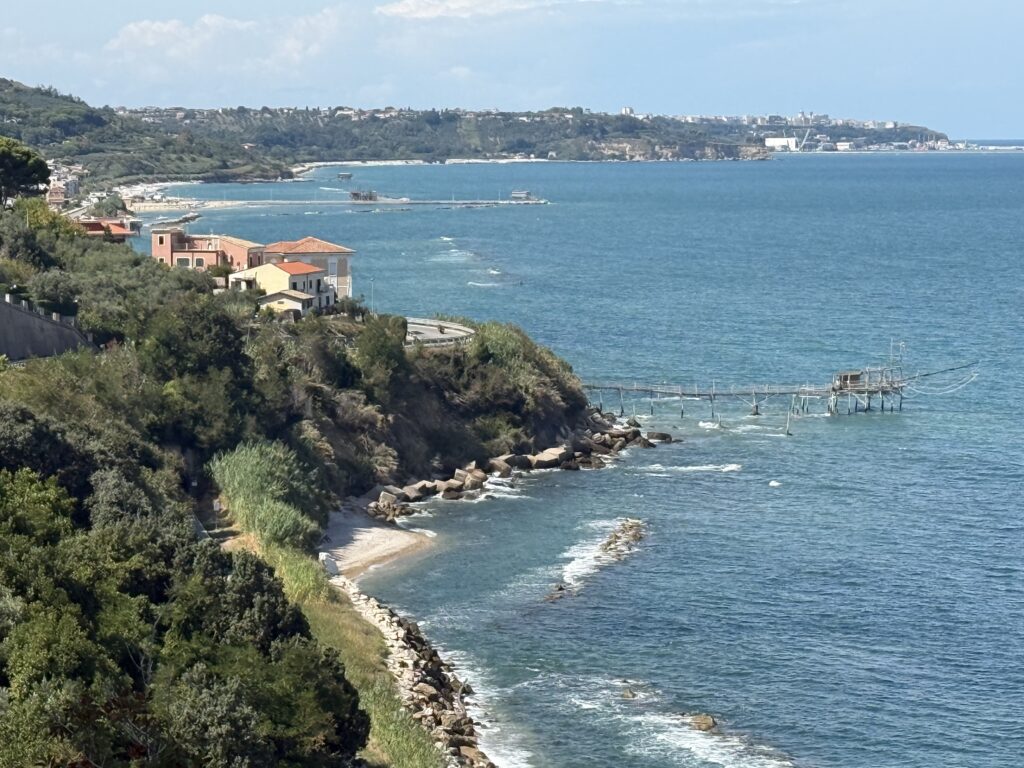
The Trabocchi Coast and its hinterlands in southern Abruzzo is one of those rare places where you can literally see how landscape, history and culture become food. Wooden fishing machines on stilts reach into the Adriatic, medieval villages cling to the hills behind them, and ancient shepherds’ paths still link the sea to the high pastures of the Apennines. In between, vineyards, olive groves and wheat fields create a pantry that has shaped the local cuisine for centuries.
As this is a extended blog, I provide you with a content overview, in case you prefer to see the visual report first, or come back for the recipe at the end!
- A coastline built on wood, stone and wind
- A brief culinary history of southern Abruzzo
- Day 1 – Vasto Marina & “La Mugnaia”
- Day 2 – Trigno Valley & Costa dei Trabocchi
- Day 3 – From nature reserves to trabocchi and castles
- Day 4 – Tratturi, shepherds and the “City of Oil”
- The pillars of Trabocchi Coast culinary heritage
- Photo’s of the tour: Trabocchi Coast in pictures
- Recipe of the Brodetto all Vastese
Let’s go!

A coastline built on wood, stone and wind
The Costa dei Trabocchi, listed on UNESCO Heritage, runs for roughly 60 km along the Adriatic in the province of Chieti, from Francavilla al Mare down to San Salvo. It’s named after the trabocchi (or trabucco in singular): wooden fishing platforms anchored to the rocks and jutting out over the sea like long-legged insects. Built from Aleppo pine and connected to shore by narrow gangways, they carry large lift nets operated by winches – a way to fish safely from the coast even in rough seas.
These structures, documented since at least the 18th century, reflect a region that was historically poor but ingenious. Instead of risking small boats on dangerous currents, families invested in these semi-permanent “machines” that could be worked by a few people, day or night. Today many trabocchi have been restored and turned into atmospheric seafood restaurants, but they are still protected as part of Abruzzo’s historical and cultural heritage.
Behind the coast rise the Maiella and Gran Sasso massifs, and between mountains and sea lie hills striped with vines and olives. This geography created a natural partnership: fishing communities on the shore, wine- and olive-growing villages inland, and shepherds moving flocks between lowland winter pastures and high summer grazing. That triangle of sea, hill and mountain is the key to understanding what ends up on the table.
A brief culinary history of southern Abruzzo
From Roman producers to pastoral countryside
Under Rome, the Abruzzo coast supplied olive oil, grain and wine to the wider empire; the region of Chieti is still dotted with archaeological remains of Roman farm villas. Later, through Lombard, Norman, Angevin and Aragonese rule, the area remained largely rural, with subsistence farming and shepherding dominating inland and small-scale fishing along the coast.
For centuries, the economy of inland Abruzzo revolved around transhumance: seasonal movement of sheep along grassy corridors called tratturi, from the Apennine highlands to lowland pastures in Puglia and back. This produced milk, pecorino cheeses, mutton and lamb, and a cuisine of simple breads, soups and grilled meats that had to be practical and filling.
The coastal pantry: brodetti, scapece and pasta with seafood
On the coast, fishermen developed their own cucina povera based on what the Adriatic offered: small mixed fish, shellfish and inexpensive species turned into stews, marinades and grills. A whole family of brodetti (fish stews) evolved in ports like Vasto, Giulianova and Pescara – tomato-based soups cooked in earthenware pots, flavoured with hot chilli (peperoncino) and served with bread.
In Vasto in particular, cooks also prepared scapece alla vastese, where fried skate or other fish is preserved in saffron-tinted vinegar in wooden barrels, and the rich salami ventricina del Vastese, made from large chunks of pork seasoned with sweet and hot pepper, garlic and wild fennel.
Political unification in the 19th century and economic hardship in the 20th led many Abruzzesi to emigrate, but they took these recipes with them. Only in recent decades have the Trabocchi Coast and its inland valleys been rediscovered as gastronomic destinations, with local producers, consortia and tourism boards working to protect and promote traditional foods.
Against that backdrop, your itinerary reads like a curated lesson in how sea, land and mountains meet on the plate.
Day 1 – Vasto Marina & “La Mugnaia”: wheat, wine and peasant pasta

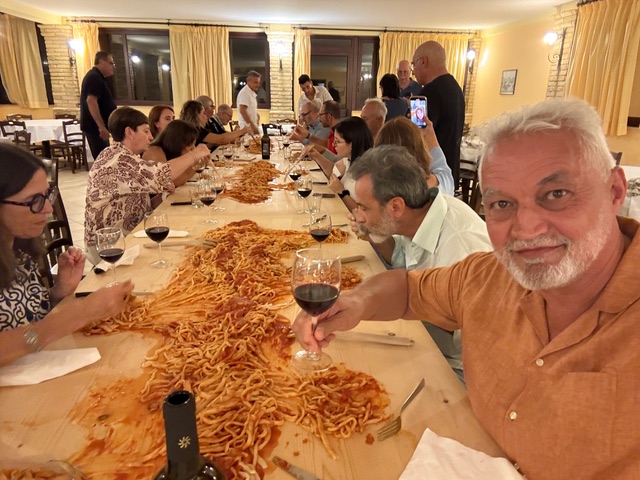
The evening revolves around Cantina del Casale and the traditional experience called “La Mugnaia”. Pasta alla mugnaia (also known as maccheroni alla mugnaia or alla molinara) is one of Abruzzo’s most distinctive pastas: a single, thick, hand-pulled strand of dough made from just flour, water and salt, stretched and rolled until it forms a long, rustic “rope” of pasta. It’s usually served with a robust meat ragù and generous shavings of pecorino.
We arrived in Vasto Marina and check into the Hotel Acquario, with the Adriatic just across the road. The welcome cocktail and tour presentation already sketch out what’s coming: a journey through coastal Abruzzo’s food and wine.
This dish captures several strands of regional history:
- The importance of durum wheat grown on the hills behind Vasto.
- The tradition of making pasta by hand in peasant households, without eggs (which were too valuable to waste).
- The culture of sharing: a long coil of pasta brought to the table in a single pan, served family-style.
At Cantina del Casale, La Mugnaia is paired with local wines – typically Montepulciano d’Abruzzo (a structured red) and Trebbiano d’Abruzzo or Pecorino (fresh whites) from the surrounding “Chieti hills” DOC area, one of Abruzzo’s most prolific wine districts.
By the end of the first night, we’ve already tasted two pillars of the Trabocchi pantry: grain turned into pasta and grapes turned into wine.
Day 2 – Trigno Valley & Costa dei Trabocchi: hills, river and sea
Morning: Trigno Valley – between Molise and Abruzzo
The second day takes us inland along the Trigno River, which marks part of the historical border between Abruzzo and Molise. This valley is dotted with small villages, mixed woodland and mosaics of fields and pastures.
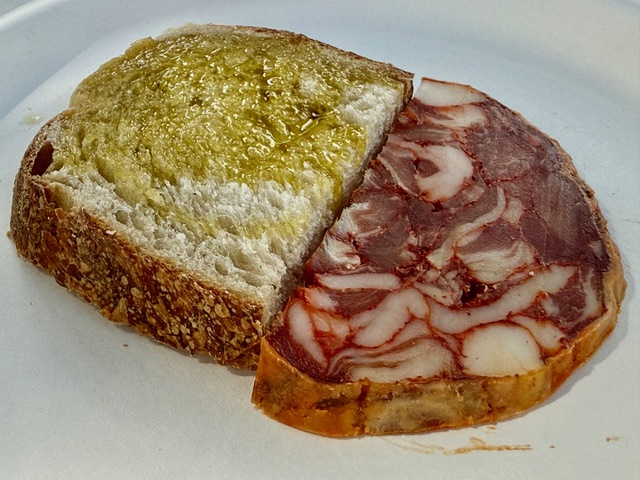
Here, we taste local Trigno Valley products: often a mix of artisanal cheeses (sheep’s and cow’s milk), honey, pulses, breads and cured meats. This is prime territory for ventricina del Vastese, the coarse, chilli-rich salami that originated in farmhouses around Vasto and the Trigno area.
The environment – relatively isolated, with cold winters and hot summers – favoured products that could be preserved: salami, aged cheeses, dried pulses and hardy vegetables. Politically, this was long a marginal, poor area; culinary creativity grew out of necessity rather than luxury.
Afternoon & sunset: the sea from a boat
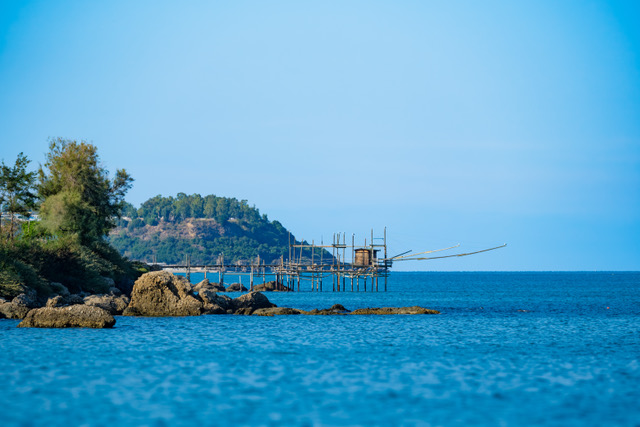
In mid-afternoon we head back to the coast for a boat tour of the Costa dei Trabocchi. Seen from the water, the trabocchi look like fragile, improbable machines; up close, they are robust wooden constructions designed to harness currents and fish movements.
Our aperitif on board with local products at sunset brings everything together:

- Seafood canapés – with marinated anchovies, small fried fish, prawns.
- Cheese and cured meats from the hills (ventricina, pecorino).
- Dolci – typical reginal sweets.
- Local wine in your glass, while the sun sinks behind the Maiella massif.
This mix of sea and inland foods is not a tourist invention; for centuries, coastal families relied on the markets of Vasto and San Salvo to exchange fish for cheese, grain or meat brought in by farmers and shepherds.
Evening: Brodetto alla Vastese – the fisherman’s masterpiece
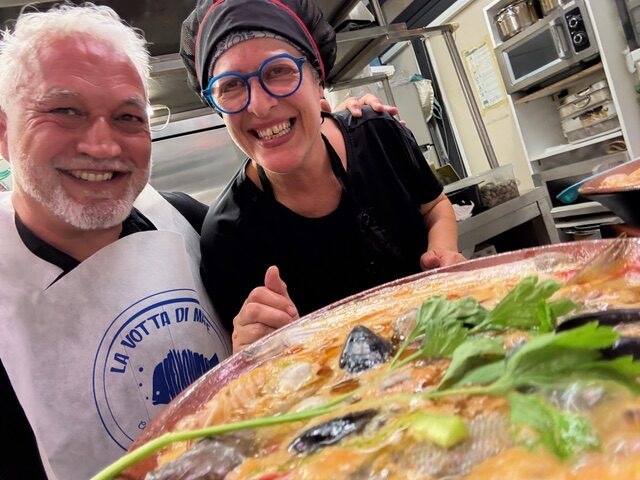
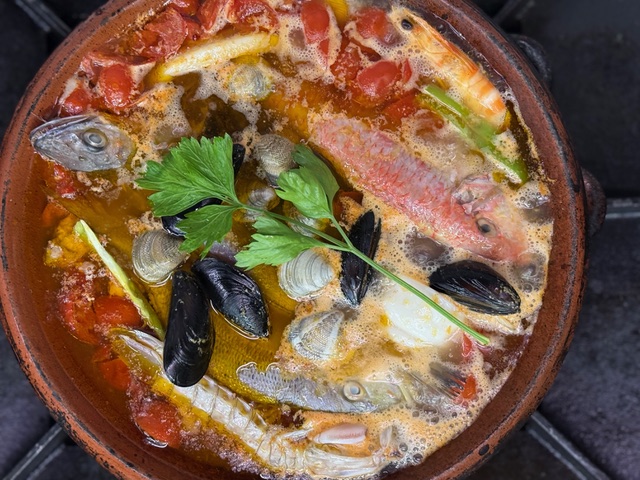
Coming back to Vasto for dinner, chef Beatrice Salvatorelli of La Vòtta di Mare prepared her traditional Brodetto alla Vastese for us, the area’s signature fish stew. . Unlike some other Italian fish soups, this version is emphatically about fresh mixed fish, cooked quickly in a wide pan with tomatoes, garlic, hot pepper and local olive oil; it traditionally doesn’t use stock and avoids long simmering that would blur the distinct textures.
Classic brodetto uses the “less noble” catch: scorpionfish, weever, gurnard, small hake, cuttlefish, maybe a few shellfish – whatever the nets bring in. The dish speaks to:
- A zero-waste, zero-pretence fishing culture, where variety is expected.
- The influence of New World products (tomatoes and chilli) that became essential to Abruzzo’s coastal cuisine.
- The habit of eating collectively: a large pan set in the middle, chunks of bread to soak up the broth.
Brodetto is now listed in food-lover guides as one of the must-try dishes of Italy, but on a local level it’s still very much comfort food – a taste of home for Vastesi.
Day 3 – From nature reserves to trabocchi and castles
La Grotta delle Farfalle – wild herbs and foraging
The morning hike to La Grotta delle Farfalle nature reserve introduces another layer: the wild side of Abruzzo. Here we’re in a landscape of karst caves, Mediterranean scrub and oak woods. For centuries, rural families foraged for wild greens, mushrooms and herbs to stretch their diets – ingredients that still appear in seasonal dishes, fritters and simple sautés.
Lunch on Trabocco Punta Tufano – fishing machines turned dining rooms
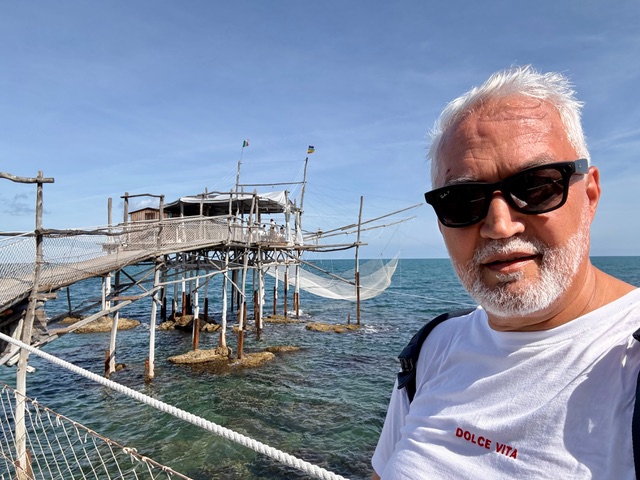
By midday you reach Trabocco Punta Tufano for a seafood tasting. Eating on a trabocco is a unique Abruzzese experience: you can feel the structure move with the waves under your feet as nets hang nearby to dry. Historically, these machines allowed families to fish without boats, offering a more controlled, less dangerous way to work the sea.
Today, many trabocchi along this coast have been restored and converted into restaurants where set menus showcase:
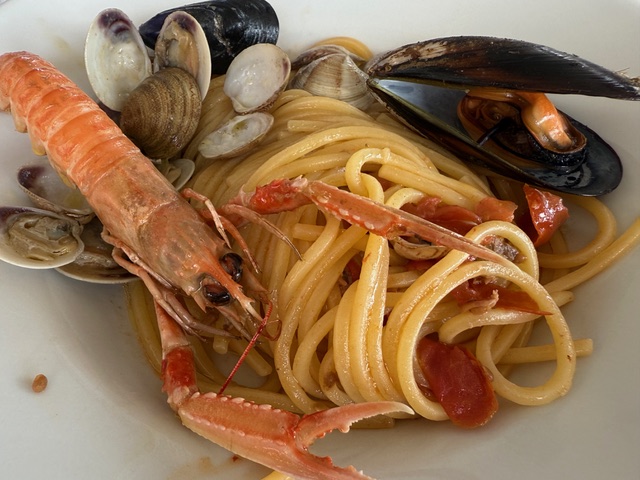
- Crudi (raw marinated fish and shellfish)
- Warm antipasti like mussels, clams and baby octopus
- Pasta with seafood (often using local scampi between Pescara and Vasto)
- Grilled or baked whole fish, finished with olive oil and lemon
It’s a modern transformation of a working tool into a gastronomic stage, but one that still respects the original logic: fresh catch, minimal travel, simple preparation.
Ortona & Crecchio – castles, wine and inland products

In the afternoon we move up the coast to Ortona, with its Aragonese castle overlooking the port. Here the connection between sea trade and inland agriculture becomes tangible: historically, Ortona shipped grain, wine and oil; today it’s a gateway to the Montepulciano d’Abruzzo and Trebbiano vineyards inland.
A stop at the Dora Sarchese Wine Fountain on the road between Ortona and the countryside is more than just a quirky photo opportunity; it’s a marketing expression of local pride in wine that has been produced here for centuries. The surrounding hills of the Chieti province form one of the densest wine areas in Italy, with DOCs that support small and medium producers.
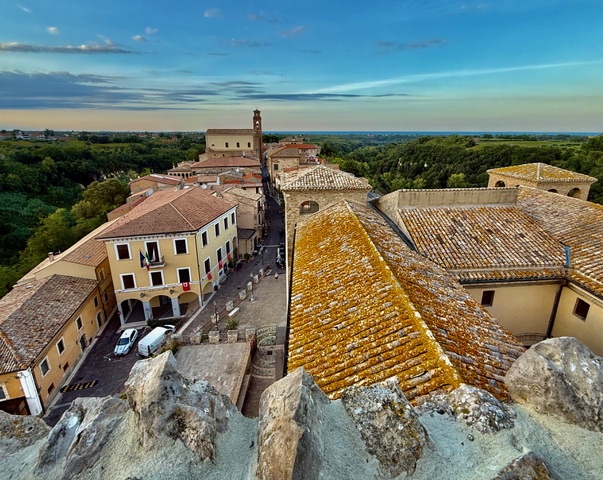
The evening visit to the Ducal Castle of Crecchio, followed by a tasting of local products, brings us back to classic inland Abruzzo:
- Sheep and cow’s cheeses
- Cured meats (possibly including ventricina and other salumi)
- Olive oil and simple baked goods
These castles once guarded feudal territories; today they act as dramatic venues for cultural and food events, bridging historical memory and contemporary tourism.
Day 4 – Tratturi, shepherds and the “City of Oil”
Voltigno & the shepherds’ tratturi – the mountain side of the story
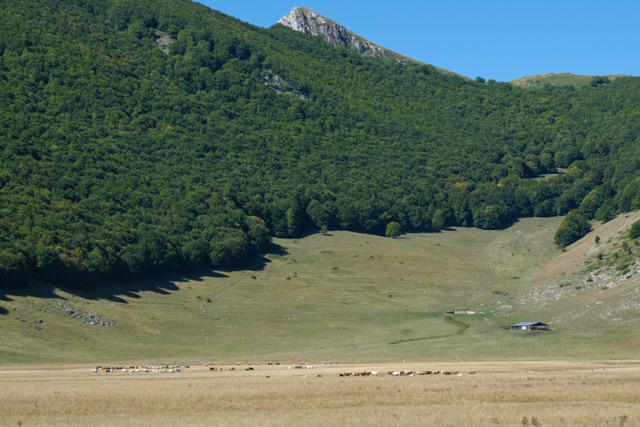
The last day takes us away from the sea into the Voltigno plateau, part of the Gran Sasso–Monti della Laga massif. Here we walk “Along the Via Salinas and the Shepherds’ Tratturi” – the grassy seasonal routes where flocks travelled to and from Puglia.
A tasting with a local shepherd sums up centuries of pastoral cuisine:
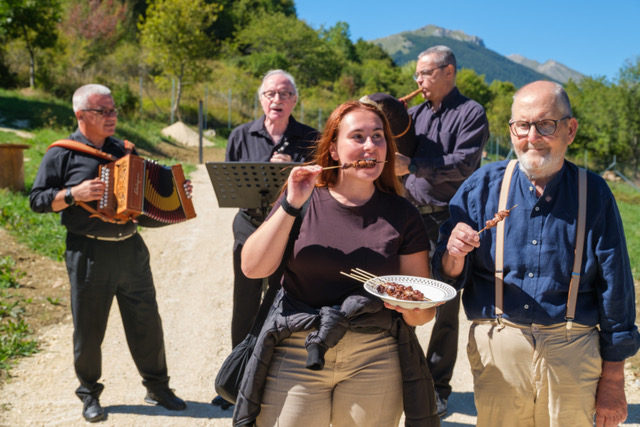
- Fresh and aged pecorino
- Ricotta and other dairy products
- Arrosticini, cubes of grilled sheep roasted on a stick
- Rustic bread and perhaps a jug of local red wine
This is food that had to be portable, preservable and high-energy, eaten outdoors and often cooked over embers. It’s also where you see how Abruzzo’s mountain culture feeds directly into dishes you may have met on the coast, like lamb skewers or pecorino-topped pastas.
Loreto Aprutino – the “City of Oil”
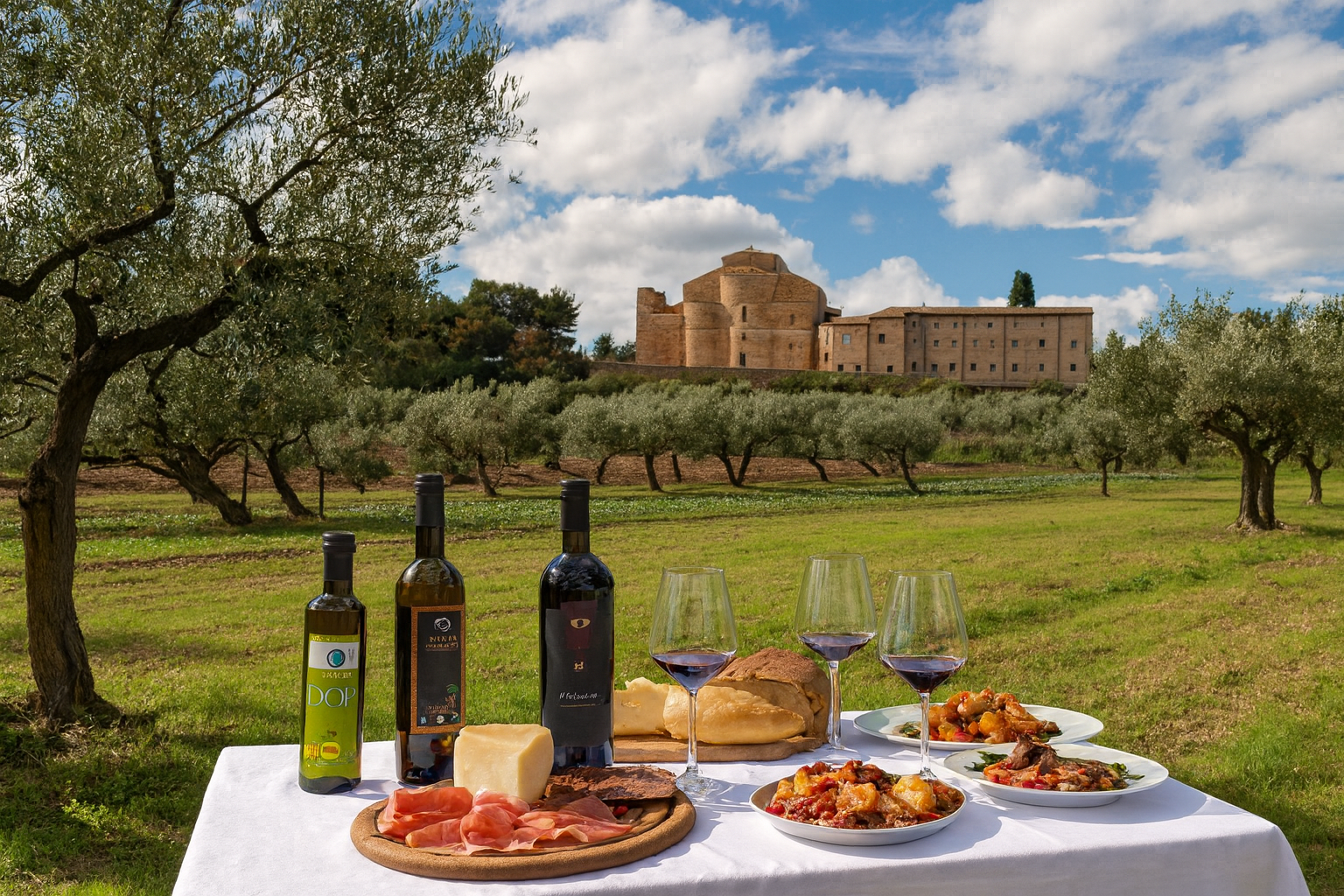
In the evening we head to Loreto Aprutino, often called a “Città dell’Olio” and widely considered part of Abruzzo’s “golden triangle” of olive oil production.
The rolling hills around Loreto produce Aprutino Pescarese DOP olive oil, a protected designation that recognises the area’s long history of high-quality, mono-cultivar extra virgin oils. These oils are known for:
- Fruity aromas
- Notes of almonds, artichoke and herbs
- A peppery, slightly bitter finish that stands up well in simple salads, bruschette and vegetable dishes.
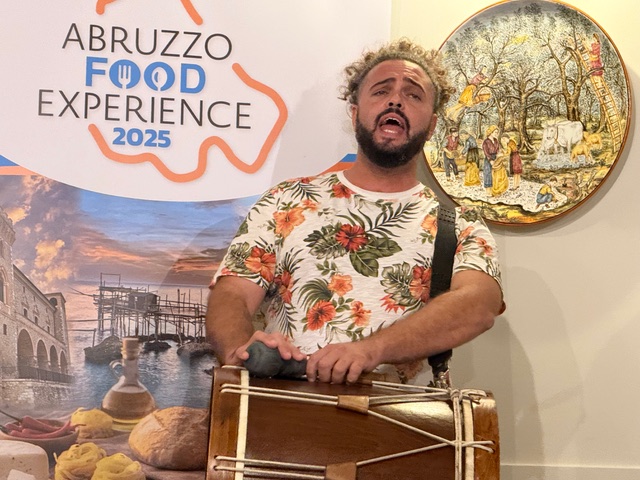
Our “Dinner with History: The flavours of transhumance” makes the link explicit: it’s a menu that revisits ancient shepherds’ and farmers’ food in a modern key, often featuring:
- Lamb and mutton dishes
- Grains and pulses (farro, chickpeas, lentils)
- Wild or bitter greens
- Generous use of local olive oil
Served in a historic restaurant, accompanied by traditional music, it becomes a narrative performance: how movement, hardship and landscape shaped what people ate, and how those flavours can still speak to contemporary diners.
The pillars of Trabocchi Coast culinary heritage
Pulling all of this together, you can see some clear structural elements in the culinary heritage of the Trabocchi Coast and its hinterland:
- Sea & trabocchi
- Mixed fish stews like brodetto alla vastese
- Fried and marinated fish (pesce fritto, scapece)
- Seafood menus served on restored trabocchi, turning fishing machines into iconic dining rooms.
- Hills, wheat & wine
- Hearty pastas like pasta alla mugnaia made from local wheat
- Cured meats such as ventricina del Vastese
- Montepulciano d’Abruzzo and Trebbiano d’Abruzzo wines from the Chieti hills.
- Mountains & transhumance
- Sheep-based products: pecorino, ricotta, lamb and mutton
- Simple, robust dishes born along the tratturi, now reinterpreted in events like “Dinner with History”.
- Olive oil & the “golden triangle”
- High-quality extra virgin olive oil from Loreto Aprutino and neighbouring towns, protected under DOP status and used as the main fat in nearly every dish.
- Cultural resilience
- A history of poverty, emigration and peripheral politics that fostered cucina povera: making the most of humble ingredients, preserving food, wasting nothing.
- Recent decades of heritage protection and food tourism, which have turned trabocchi, castles, oil mills and wineries into places where the story of this cuisine is actively told.
Closing thoughts
This tour was far beyond just sampling dishes; we have moved through a living food landscape where each stop – a trabocco, a castle, a valley, a mountain plateau – explains a piece of the puzzle. The Costa dei Trabocchi is more than a beautiful stretch of Adriatic coast; it’s the meeting point of fishermen, farmers and shepherds, of Roman roots and modern wine bars, of wooden fishing machines and stainless-steel kitchens.
Follow that line from La Mugnaia in Vasto to the Brodetto alla Vastese, from the Trigno Valley to Trabocco Punta Tufano, from Voltigno’s shepherds to Loreto Aprutino’s olive oil, and you’re tracing the full arc of Abruzzo’s coastal culinary heritage – one that’s still evolving with every new visitor who dares to get of the highway from Bologna to Puglia and sits down to taste it.
Trabocchi Coust in the picture


Brodetto alla Vastese (Fish Stew from Vasto)
Serves 4 people
Ingredients
Fish & seafood
Use very fresh, mixed Adriatic-style fish. Approx. 1.2–1.5 kg total:
- 400 g firm white fish in chunks (e.g. monkfish, hake, cod or similar)
- 300 g medium whole fish, cleaned (e.g. red mullet, small sea bream, gurnard)
- 300 g mixed shellfish (mussels, clams) – scrubbed and rinsed
- 200–300 g squid or cuttlefish, cleaned and cut into rings/strips
- Optional: a handful of raw prawns/shrimps
Base & sauce
- 4–5 tbsp extra virgin olive oil
- 2–3 cloves garlic, lightly crushed
- 1 small onion or 2 shallots, finely chopped (some traditional recipes skip onion; your call)
- 1 fresh red chilli pepper, sliced (or ½–1 tsp dried chilli flakes), to taste
- 150–200 ml dry white wine (Abruzzo if you have it)
- 400 g passata or peeled tomatoes, crushed with a fork
- 2 tbsp tomato concentrate/paste (optional but deepens flavour)
- 150–200 ml fish stock or water (use stock if you have fish bones/heads)
- Salt, to taste
- A few sprigs flat-leaf parsley, chopped, for finishing
To serve
- capelli d’angelo pasta
- Thick slices of rustic bread, preferably a day old
- Extra virgin olive oil for drizzling
- Optional: 1 garlic clove to rub on the toasted bread
The angel-hair pasta typically used in Vasto (for example, to finish brodetto alla vastese) is simply called capelli d’angelo – literally “angel’s hair”, i.e. very thin spaghetti.
Preparation
1. Prep the fish
- Clean and scale the whole fish, leaving heads and bones on (they give flavour).
- Cut larger fillets into chunky pieces.
- Clean squid/cuttlefish and cut into rings or strips.
- Scrub mussels and clams well and discard any that are cracked or stay open when tapped.
Try to keep pieces fairly large so they don’t fall apart in the stew.
2. Make the base
- In a wide, heavy pan (or large sauté pan), heat the olive oil over medium heat.
- Add garlic (and onion, if using) and gently sauté until fragrant and just golden, not burnt.
- Add the chilli and let it soften for a minute.
- Pour in the white wine, bring to a simmer and let the alcohol evaporate for 2–3 minutes.
3. Add tomatoes and simmer
- Add passata (and tomato paste if using), stir and season lightly with salt.
- Add fish stock or water – you want a loose, soupy sauce, not too thick.
- Simmer gently for about 10–15 minutes so the flavours meld and the sauce slightly reduces.
Taste and adjust salt and chilli now; once the fish goes in you want minimal stirring.
4. Cook the fish in layers
Traditional brodetto is not stirred once the fish is in, to avoid breaking it. Swirl the pan gently instead.
- First add squid/cuttlefish to the simmering sauce – they need the longest. Simmer 5–7 minutes.
- Add the whole fish and large chunks of firm fish, nestling them into the sauce in a single layer if possible.
- After 5 minutes, add mussels, clams and any prawns, tucking them between the fish.
- Cover with a lid and cook another 5–8 minutes on low heat, just until:
- the fish is cooked through,
- the shellfish open (discard any that stay closed).
Shake the pan gently from time to time instead of stirring with a spoon.
Sprinkle with chopped parsley right at the end.
5. Prepare the bread & serve
- Add the capelli d’angelo to the stew and let it cook briefly until it is al dente.
- Toast the bread slices on a grill or in a dry pan until lightly charred at the edges.
- If you like, rub lightly with a cut clove of garlic.
- Drizzle with a little extra virgin olive oil.
To serve, place 1–2 slices of bread in each warm bowl, ladle over plenty of broth, then arrange pieces of fish and seafood on top. Finish with a little extra parsley and a thread of olive oil.
Tips & variations
- Spiciness: Vasto versions are often a bit fiery – don’t be shy with the chilli if you like heat.
- Acidity: Some cooks add a splash of white wine vinegar or lemon right at the end for a bright note; use very sparingly.
- Even more authentic: Skip the onion, use only garlic + chilli + tomato, and keep the broth fairly loose. The star should be the fish.
If you tell me what fish you can get locally, I can adapt the recipe to a specific shopping list for your market or fishmonger.